It can be extremely daunting trying to plan a visit to India. In fact, it's the kind of destination that just can't be ticked off with one trip. I've been visiting since I was a child (my mother is Indian, and I have family in the Southern states of Kerala and Karnataka), but my India bucket list is still far longer than the places ticked off.
However there's one region that offers plenty of lure for travellers, particularly first time visitors to the country. The Golden Triangle of Delhi, Agra, and Jaipur, is an endlessly popular route. Taking in the bustling capital city, Jaipur's palaces, and of course, the iconic Taj Mahal, it's an excellent starting point. But beyond Jaipur, the state of Rajasthan has a number of beautiful cities worthy of visiting.
India has a reputation as a difficult place to visit - not without reason. It's busy, chaotic, can be dirty and dusty and you will often find yourself on high alert. Simply put, it's the kind of travel that will test you. It also needs quite a lot of planning and research, as things don't always function as one might expect, and the bureaucracy can have you on the brink of tears (trust me, I've been there).
Now I don't say this to put you off! It's also a richly rewarding destination, in so many ways. For those who love discovering and immersing themselves in new cultures, it's a treasure trove of experiences. History buffs will be kept plenty busy with the number of historical sights, museums, and palaces. And for those who delight in visuals, India is a riot of colour, design, and architectural wonders. It's equally suited to budget and luxury travellers alike, with plenty of options for both ends of the spectrum.
I've put together this two week North India itinerary to showcase some of the best destinations and attractions throughout the Golden Triangle and Rajasthan. This itinerary is based on my first hand experience exploring the region, with all my top tips and advice to get the most out of your trip. From exploring Jaipur's regal heritage, to luxuriating in a tranquil Rajasthan rural retreat, read on for the very best experiences and things to do in this spectacular North Indian region.

The Rajasthan & Golden Triangle 2 Week India Itinerary
1 Night: Adjust your body clock with a night in Delhi*
2 Nights: Head to Agra to see the iconic Taj Mahal
4 Nights: Explore the palaces and forts of Regal Jaipur
2 Nights: See the sights of Rajasthan's striking Blue City of Jodhpur
2 Nights: Experience a glimpse of rural Rajasthan outside Jodhpur
+ Want to extend this itinerary? From Jodhpur, head North to Bikaner, and / or West to Jaisalmer
3 Nights: Soak up the history and heritage of North India's Lake City, Udaipur
+ If you have an early return flight from Delhi, you may want to take a night off Jaipur or Udaipur, to spend your last night in Delhi. Alternatively, continue South to Mumbai, Goa, and / or the palm tree-lined backwaters of Kerala.
*This itinerary assumes you'll most likely be flying into Delhi, as the main hub for international flights. I've only included a night in Delhi, as personally it's not one of my favourite Indian cities, and arguably offers less for tourists than the other destinations. However I'm sure many would passionately refute this, so I recommend doing your own research to decide whether Delhi is worthy of a few days of your time!

India 101
Getting to North India: You'll most likely be flying into India via Delhi's Indira Gandhi International Airport, which has a number of both direct and indirect flight options from most major destinations. However if you're coming in to the region from another part of India, there are plenty of both train and coach options for getting around (see below).
Money in India: The currency in India is the Indian Rupee (₹INR). It's worth having some petty cash on you for smaller destinations and purchases, but card is also accepted by many outlets. However, to get around with ease, I highly recommend setting up a UPI account. UPI is India's main method of payment, essentially allowing you to scan QR codes for vendors to pay for things. Everyone from big hotels and restaurant brands down to tuk tuk drivers have a QR, making fishing for change largely a thing of the past. It's a bit of a faff to set up, but so worth it. We used Mony, however I would exercise caution with how much you load your account with, as it took absolutely ages and lots of following up to get the excess amount refunded when we left. Altneratively, Wise recommends Cheq UPI and ICICI Bank iMobile Pay - if you try either of these, do let me know how you get on!
Getting around India: India has a well connected train system, making getting around the region fairly straightforward. You have two main booking options. There's 12GoAsia, which hosts all the most popular routes, however charges a hefty markup. Or, if you have the patience, you can set up an account with Indian Railways (this blog post outlines how to register). It's a faff, and the website isn't the easiest to figure out, but you'll have more route options, and be paying far less. On the train from Delhi to Agra we got chatting to a couple next to us, to find out they'd paid twice the price! Note: watch out for scams where people will try to tell you you've bought the wrong ticket and that you need to go buy a foreigner ticket, or similar. I nearly fell for it, bleary eyed and jet-lagged, our first morning at Delhi airport! Within cities, Uber is readily available, and avoids the hassle of haggling.
Mobile Service in India: Your cheapest option is generally to grab a local sim when you arrive at the airport. We went with Airtel, and you'll see plenty of kiosks selling these. Or if you prefer a more convenient option, organise an eSim in advance of your trip. I used Nomad, and you can use ANOULDADMU for money off.
What to pack for India: India is a fairly conservative country, so for women I recommend packing clothes that offer more coverage. Think light, loose trousers, shirts, and maxi dresses, as well as a shawl for a quick cover up for any religious buildings. The streets can be dirty, so sturdy, sensible sandals will be your best friend. I lived in my trusty birks!
For more advice, check out my 10 India Travel Tips for First Timers
North India 2 Week Itinerary Breakdown
1 Night in Delhi
As I've mentioned above, personally I recommend Delhi as a stopover before travelling further afield, particularly if you're short on time. If you want to see more of Delhi, perhaps leave it till the end of your trip, when you've gotten adjusted to India's frantic pace! Particularly for a first-time visitor, it can be a very overwhelming city, as it's extremely busy and at times chaotic. I do want to reiterate that this is just personal preference - if you thrive in vibrant, bustling cities, then by all means, stay a few days.
As such, I don't have many recommendations for Delhi. Rest up after a long flight, kick the jetlag, grab a curry and maybe see a sight or two if you have the energy. Then head out the next day by train to Agra.


2 Nights in Agra
Agra, in Delhi's neighbouring state of Uttar Pradesh, would arguably not make it onto the tourist trail were it not for one very important sight. That, of course, is the Taj Mahal. One of the Seven World Wonders, it's the undisputed icon of India, and one of the most recognisable buildings in the world. See my overview on experiencing the Taj Mahal below.
However once you've seen the Taj, there's plenty more in Agra to fill a day or two. There's Agra Fort, a striking 16th-century red stone fortress. Then there's the Tomb of Itmad-ud-Daulah, a mausoleum affectionally known as the Baby Taj.
As Agra is such an established tourist destination, you've also got plenty of choice in terms of dining and accommodation. Realistically, it's not likely to be anyone's favourite Indian city (feel free to convince me otherwise), but it's nonetheless a stalwart on a Cultural Triangle India itinerary.

Visiting the Taj Mahal
Pretty much every first timer's India itinerary includes the Taj Mahal, and with good reason. A UNESCO World Heritage Site, and one of the New Wonders of The World, it's one of the most beautiful buildings, well, ever. But it's not just it's architecture that makes the Taj Mahal so interesting. Built in the 17th century by Mughal emperor Shah Jahan for his wife, Mumtaz Mahal, it's also a testament to love, housing both their tombs.
- The Taj Mahal is open every day except Fridays, opening 30 minutes before sunrise, and closing 30 minutes after sunset. This does make things rather complicated with such variable hours, however this usually falls at around 06:00AM to 19:00PM. We joined the queue at 05:30 and were first in line in February, but by the time it opened the queues were pretty huge.
- There are two gates from which to buy tickets and enter, the East and West Gate. At time of writing, tickets for foreigners cost 1100 rupees. There's a further 200 rupee ticket to enter the main mausoleum - this is optional, and doesn't really alter your overall experience much, but you may as well if you're there!
- The Taj Mahal is also open for night viewings for 5 nights around the full moon every month, more information about which can be viewed on the official website.
- There's a long list of things that aren't allowed at the Taj Mahal, so keep your belongings to the very minimum. For example, no food and drink, no drones, tripods, or mobile phone chargers. Take your phone, camera, and wallet, and leave everything else behind!
- There's no dress code as such, however this is a mausoleum so it's recommended to dress respectfully.
Things to do in Agra
- Agra Fort: Another UNESCO World Heritage Site, this striking red sandstone fort once housed Mughal Emperors, and offers views out over the Taj. It's easily one of the most spectacular sights in Agra, and well worth a visit once you've ticked off the Taj Mahal and are wondering what to do with the rest of your day!
- Itimad-ud-Daulah’s Tomb (Baby Taj): Known as the Baby Taj, this lesser known tomb in Agra is almost as lovely. It tends to be relatively quiet, particularly in comparison to it's famous namesake, making it a pleasant place to wander and take pictures without the crowds.
- Mehtab Bagh (Sunset Garden): This garden across the river from the Taj is one of the best places in the city from which to view the famous building. It's particularly popular at sunset, when the large domes turn golden pink.
Eating and Drinking in Agra
- Good Vibes Cafe: A fun, boho spot with a terrace overlooking the street, the ideal spot for people watching over a Mango lassi
- Sheroes Cafe: A community focussed cafe run by acid attack survivors, with a pay what you feel ethos. Learn about the women's stories, and browse the shop for local crafts and souvenirs.
- The Hippie Cafe: A low key rooftop cafe and restaurant atop Joey's Hostel, with great views and a laidback vibe. We spent a chill evening watching the sun set here. Time it right (or wrong, depending on your stance) and you might just catch karaoke night...
I actually didn't have that many meals worth writing home about in Agra, hence the slightly minimal list - if you have any recs, please do leave them in the comments!


Where to stay in Agra
Budget Agra Hotels
- Joey's Hostel: This hostel is pretty much the dictionary definition of no frills, but it offers great views of the Taj from the rooftop bar and restaurant (pictured). If you're not one for bunking, they have private rooms available.
- Inara House: A well decorated stay with highly rated dining at a decent price.
- The Coral Tree: Indian hospitality paired with eclectic, colourful decor in a house that looks a bit like Frida Kahlo's Mexico abode at this pleasant Agra homestay.
- The Coral Court Homestay: Playful Indian decor and spacious rooms just a ten minute walk from the Taj.
Mid Range Agra Hotels
- Trident Agra: A family friendly resort-style property complete with a pool and kids play area to keep the little ones occupied.
- Grand Mecure Agra: A big box, somewhat corporate but reliably clean and comfortable hotel option.
Luxury Agra Hotels
- Oberoi Amarvilas: The definitive Taj view hotel, and in a suitably palatial property to give the iconic building some serious competition.
- Taj Agra: For those looking for the reliability of a name brand, Indian hotel chain Taj's Agra outpost is a sleek, modern hotel equipped with pool, fitness centre, and spa.

4 Nights in Jaipur
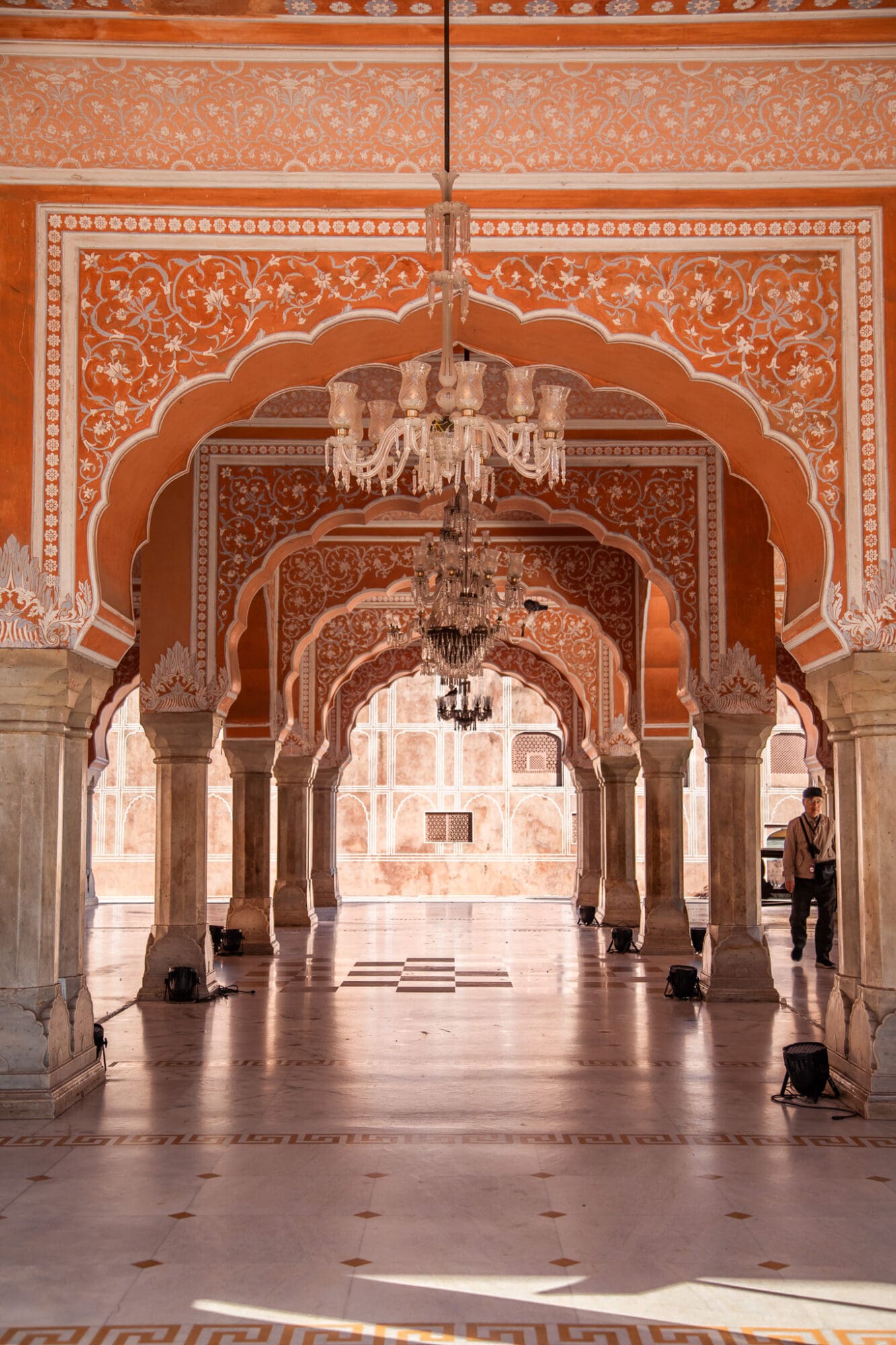
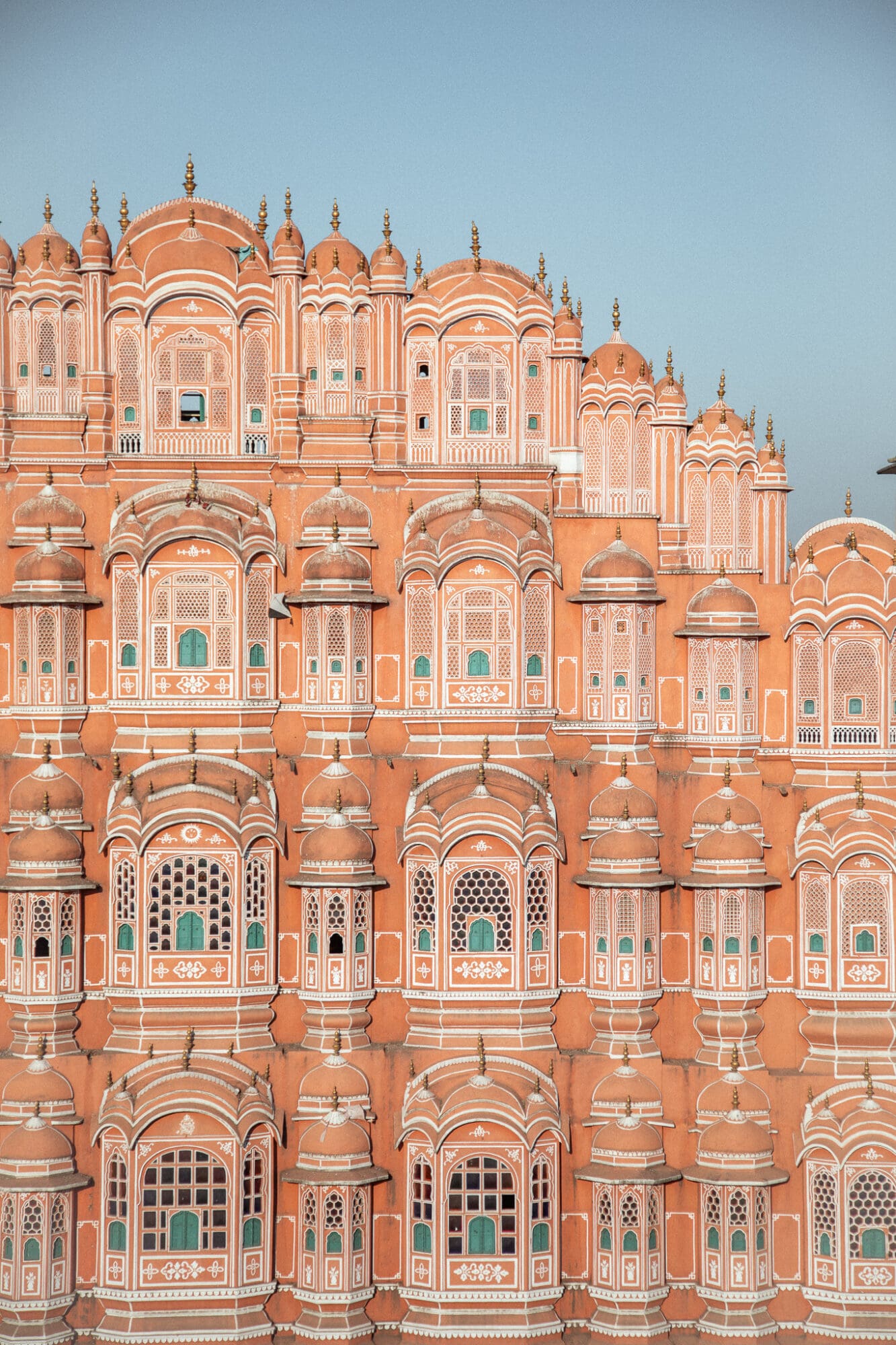
I haven't visited them all (yet!), but I imagine Jaipur must be the most beautiful city in all of India. Painted terracotta in 1876 to host the Prince of Wales, Albert Edward, it's known as "The Pink City" thanks to it's unique salmon hued buildings. Though largely ceremonial now, the city still has a royal family, and plenty of remnants of it's regal heritage to explore.
Of everywhere on this itinerary, I'd say it's the most worthy of several days of your time. There's a wealth of sightseeing, including spectacular temples, palaces, and forts. This might be contentious, but I reckon the painstakingly ornate rooms and exteriors of the City Palace and Amber Fort seriously compete with the Taj when it comes to awe-inspiring sights.
Jaipur is a city for design lovers and aesthetes all round, with a number of chic, design-led hospitality experiences. Stay in a classic haveli or former palace at a number of luxury properties. Dine in elaborate, fresco adorned interiors, and discover the cities boutique and shopping experiences.
Things to do in Jaipur
City Palace: The City Palace in Jaipur is one of the most beautiful buildings in all of India. Every corner is steeped in detail, with carved doors, painted ceilings, and of course, plenty of the city's iconic pink hue. A general ticket gives you access to the grounds, however I'd recommend booking a tour ticket, complete with a personal guide, to access the more spectacular interior rooms. At 5000 rupees for foreign visitors for the full Royal Tour (£42 at time of writing), it's a fairly hefty fee, but they're easily the best bits.
Amber Fort: Also known as Amer Fort (pictured), is a majestic fort and palace on the outskirts of Jaipur, in neighbouring Amer. Originally commissioned in 1592, the spectacular hilltop complex boasts a variety of architectural design styles. It's a sprawling place, with plenty of winding corridors, turrets, and opulent rooms to explore. I recommend aiming for opening to avoid the crowds and heat.
The Royal Cenotaphs: Gaitor Ki Chhatriyan, or the Gaitor Cenotaphs, is a royal crematorium hosting the tombs of the Kachwaha Rajput rulers. It's worth visiting due to the striking "chhatris", intricately carved pavilions that stand as memorials over the tombs. One of Jaipur's quieter spots, it's a beautiful place to soak up the city's architecture and royal past.
Hawa Mahal: Hawa Mahal is undoubtedly the icon of Jaipur. Built in 1799, it's recognisable for it's distinctive architecture, designed with 953 outer windows to allow the breeze to blow through the building. There's an entrance from behind the complex, from which you can visit the museum and see the views out over the city. Or view this impressive facade from one of the many cafes opposite, such as The Tattoo Cafe (note that you can't just take photos, you will be expected to purchase something).
Nahargarh Fort: This fort stands high above the city, offering panoramic views out over Jaipur. It's a popular spot at sunset, when it's absolutely rammed with those trying to nab a good vantage point.


Where to stay in Jaipur
Budget Jaipur Hotels
- Anuraag Villa: A budget-friendly stay in a quiet, yet convenient part of town. Space is ample, and there's a lovely downstairs cafe that does excellent cold coffees.
- Raghunath Haveli: A lovely boutique stay providing an authentic Haveli (an Indian traditional mansion) experience at budget prices.
- Pearl Palace: This maximalist stay gives the opulent City Palace a serious run for it's money, without breaking the bank.
- Shree Nikunj: A cosy homestay experience for those who would prefer a peaceful retreat away from central Jaipur.
Mid Range Jaipur Hotels
- Alsisar Haveli: A mid-range option set in a beautiful heritage Haveli , with ornate interiors and a tranquil pool.
- Hotel Narain Niwas Palace: Rajasthan's rich design legacy is on full show at this elegantly decorated property with plenty of old world charm.
Luxury Jaipur Hotels
- Leela Palace Jaipur: Experience Indian hospitality like a Maharaja at this regal palace hotel just outside town.
- Rambagh Palace: In case you hadn't yet gotten the memo, palace living is Jaipur's thing, and Rambagh Palace is one of the city's most iconic addresses.
- The Oberoi Rajvilas: Oberoi are a bit of a bucket list stay for me, and their Jaipur property is no exception. The fort style building sits in vast grounds on the outskirts of Jaipur, a remote respite from the city.
- Rajmahal Palace RAAS: Bathed in swathes of pastels, Rajmahal is one of the city's prettiest luxury stays.
Eating and Drinking in Jaipur
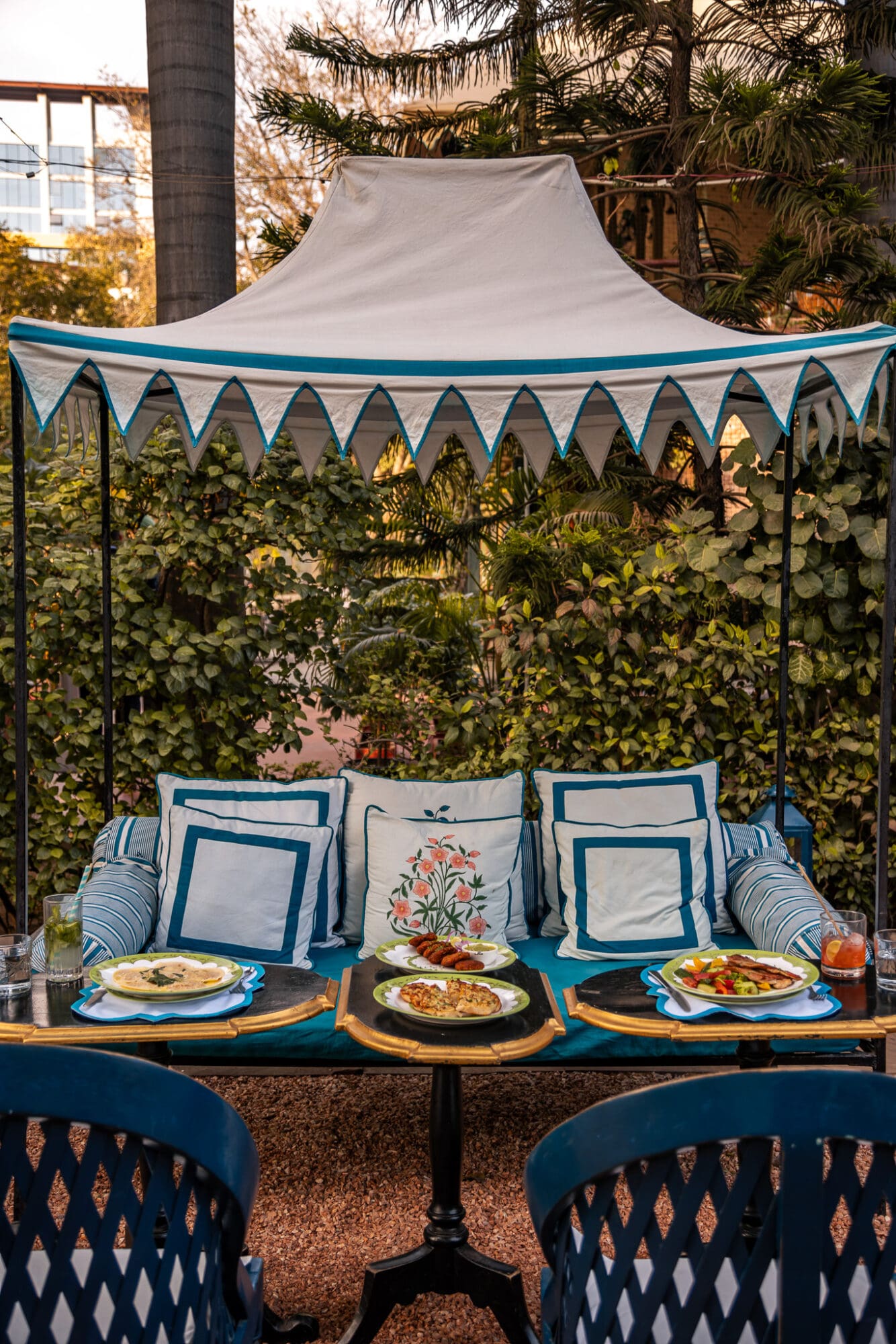
- Bar Palladio: Arguably Jaipur's most beautiful restaurant, the stylish Bar Palladio serves up Italian dishes across an elaborately decorated dining room and sleek outdoor terrace (pictured).
- Peacock Restaurant: Jaipur aesthetics and a varied menu at this tucked away alfresco dining spot atop an unassuming Jaipur hotel.
- The Tattoo Cafe: Of the two cafes overlooking the Hawa Mahal, Tattoo Cafe is the significantly better rated. There are a number of spaces, but for the best views, head to the rooftop. Note that you'll need to buy something if you want to take photos, but the food and drinks are decent.
- Once Upon a Time at the Bagh: One of my Jaipur go-tos, this pretty spot sits on the edge of town on the grounds of picturesque garden Vidyadhar Bagh.
For my full Jaipur dining guide, check this blog post for the most beautiful restaurants, cafes and bars in Jaipur.
More Jaipur: The Ultimate Jaipur Travel Guide


2 Nights in Jodhpur
If it's the vibrant colours that have drawn you to visiting India, then Jodhpur has to be on your itinerary. Set in the dramatic backdrop of the Thar Desert, Jodhpur is known as the "Blue City" thanks to the many blue-hued Brahmin buildings that make up the heart of the Old Town. But it's not just pretty vista's that make Rajasthan's second largest city worth visiting. Jodhpur is home to a number of fascinating and historically significant forts, temples, and palaces. Throngs pack out the many bazaars, where tourists and locals alike flock to purchase textiles, handicrafts, spices and jewellery. It's the ultimate city to experience Rajasthan's beauty, combined with the bustle and vitality of an archetypal Indian city.

Things to do in Jodhpur
- Mehrangarh Fort: Jodhpur's imposing fort, built in 1459, is a sight to behold. The complex houses numerous palaces and a museum, as well as offering panoramic views over the city below.
- Jaswant Thada: A striking marble cenotaph, often referred to as the "Taj Mahal of Marwar". All golden domed roofs and arched corridors, it's one of the city's most beautiful examples of Rajasthani architecture. Entry is ticketed, and modest clothing is recommended.
- Umaid Bhawan Palace: This impressive Jodhpur palace is actually a Taj Hotel, however whether you're staying here or not it's worth popping in for tea and to marvel at the sumptuous architecture and grounds.
- Explore the Brahmin Quarter: Jodhpur is famous for the bold blue houses of the Brahmin community that make up much of the historic old town. Many have sadly been repainted in recent years however a good number still remain. Head to the Navchowkiya neighbourhood and surrounds to find some of the most picturesque spots. I'd recommend taking a tour (see below), as some of the most picturesque corners can be quite hard to find, and you'll benefit from having a local guide you. Keep in mind this is a residential neighbourhood, so be considerate when taking pictures.
- Take a Walking Tour: Now I'm not usually one for a walking tour, but we took a morning tour of Jodhpur (organised through Rohet House), and it was the perfect way to experience the city before it awoke, with a local knowledgable in all the most interesting spots and secret corners.
- Toorji Ka Jhalra Bavdi: A beautiful 18th century stepwell carved from red sandstone. It's a pleasantly peaceful corner of the city, and there are a number of interesting shops and cafes in the surrounding area.
- See the Clock Tower: Head to Ghanta Ghar, a somewhat chaotic main square featuring a 19th century clocktower surrounded by the lively Sardar market. Pick up spices, textiles, and soak up a typical Jodhpur day.
Where to stay in Jodhpur
- Singhvi's Haveli: A heritage haveli with classic Indian interiors and a rooftop view out over the city, at purse-friendly prices.
- Rohet House: A charming boutique stay (pictured) with impeccable interiors and a lush outdoor pool space. A real haven for those seeking peace within the city.
- Umaid Bhawan Palace: Because why stay in a hotel when you could stay in a palace? A sumptuous Jodhpur stay with complete with pool and tennis court, and stunning Blue City views, in a grand heritage property.
- RAAS Jodhpur: An elegant, minimally designed stay in the shadow of Jodhpur Fort.
- Heritage Gouri Haveli: For those looking for an authentic Jodhpur experience, Gouri offers a reasonably priced stay in an iconic blue property.
Eating and Drinking in Jodhpur
- The Rani Mahal Jodhpur: An elevated dining option at a traditional luxury hotel in the heart of the city, with Indian cuisine and comfort Western dishes served with a side of Jodhpur rooftop views.
- Stepwell Cafe: A cute spot to sit with a cup of coffee overlooking the stepwell. It's the perfect place to take a breath, people watch, and regain some strength after a busy morning of sightseeing!
- Indique Restaurant & Bar: Prices are somewhat steep at this North Indian spot, but you're paying for the spectacular rooftop views out over the fort and clocktower.

Read More: 10 India Travel Tips

2 Nights in Rural Rajasthan
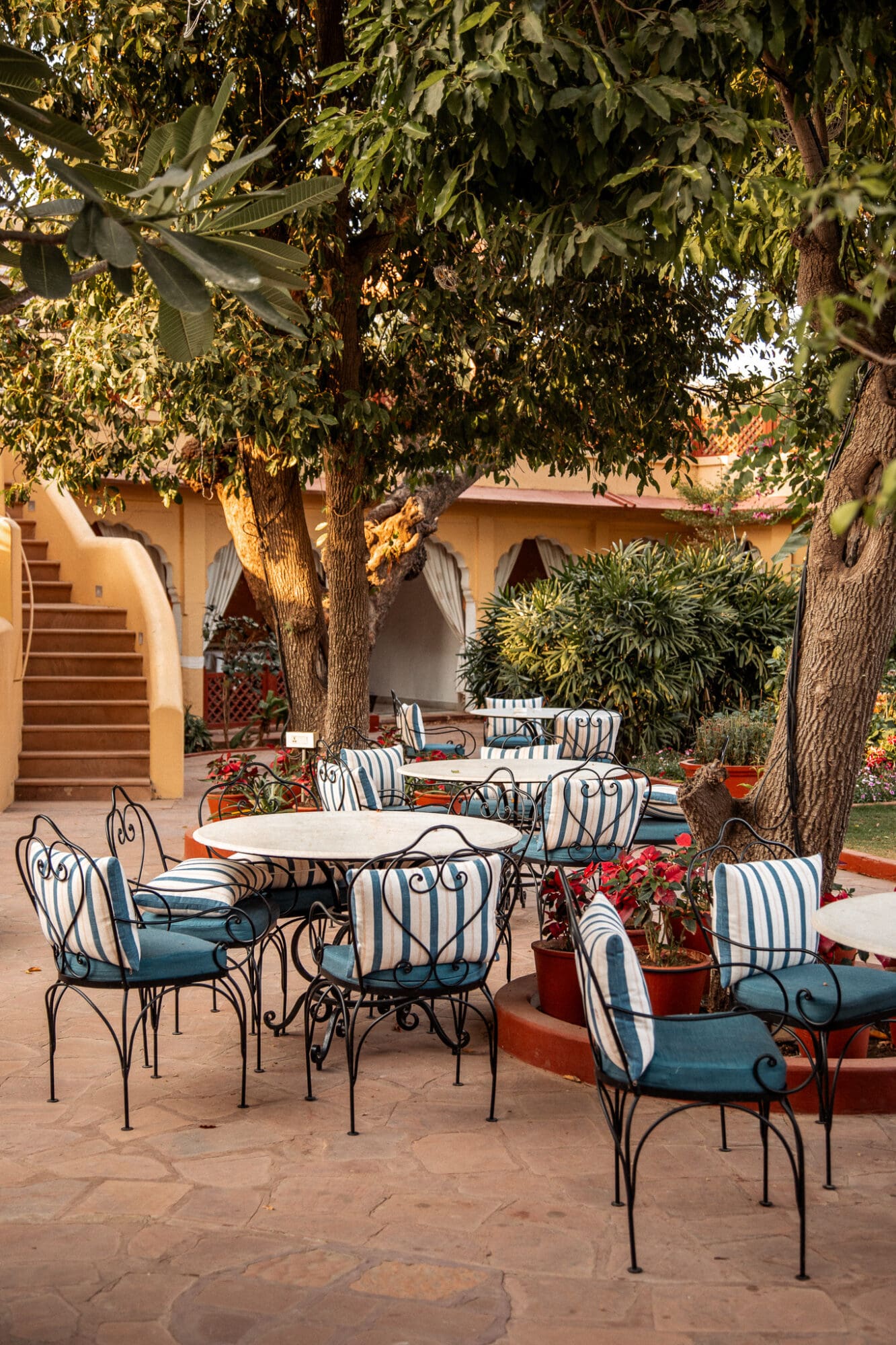
Easily the highlight of my recent Rajasthan trip was our time spent outside Jodhpur, in the rural Rajasthan countryside. We stayed across two properties around an hour from the city, Mihir Garh and Rohet Garh. I'm used to the frenetic energy of Indian cities, but this detour into the desert was a completely different, and very welcome, slower pace of life.
Arriving at Mihir Garh is a surreal experience, a striking tan-hued sandcastle in the middle of empty plains. With just a handful of rooms, it's an intimate stay. Everything is elevated. Suites and common areas are impeccably decorated in muted tones and ornamentation is provided by local craftsmanship. Every dining experience is just that, an experience, particularly as the sun sets over the vista beyond.
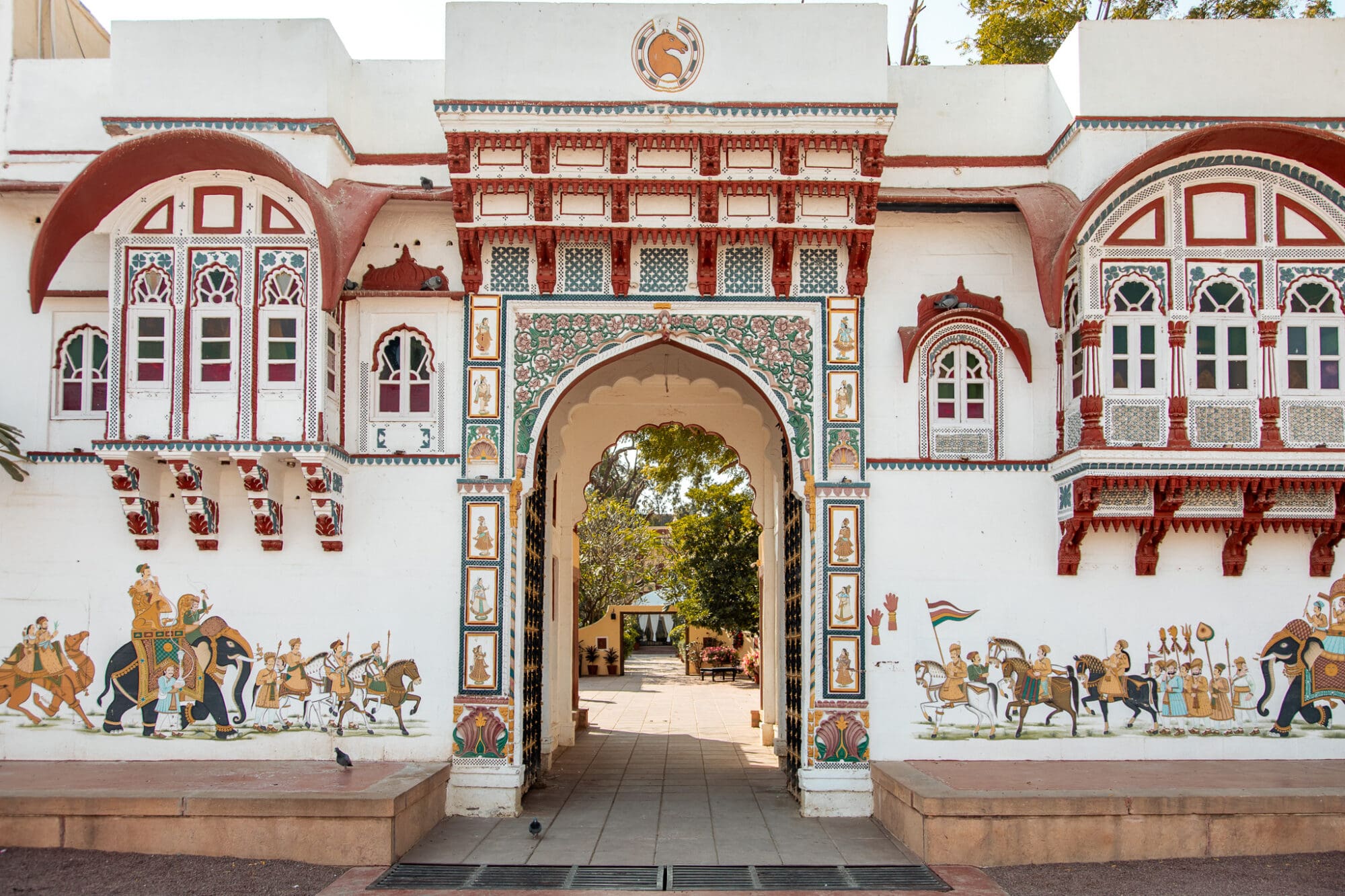
Just down the road, Rohet Garh is a more traditional Indian stay in an classic heritage building. Vast mural lined doors (tall enough for elephants to enter) take guests through to a colourful garden, around which rooms are dotted. The interiors are a mix of local design and nostalgic colonial aesthetics, and every corner has something interesting. It's especially beautiful at night when the property lights up with fairy lights and diyas, and musicians take to the garden to perform.
If you're considering booking a stay for yourself, check out my full reviews of both Mihir Garh and Rohet Garh.


3 Nights in Udaipur
Known as the Venice of India, Udaipur is one of Rajasthan's most picturesque cities. Rajput style architecture jostles for attention along the banks of the city's many lakes, and every other building seems to be a palace, temple, or heritage hotel. But beyond it's beauty, there's a great vibe to Udaipur. Yes, it's busy, bustling, full of life. But the pace feels slightly less intense than some of the other cities on this list, making for a surprisingly pleasant, laidback city experience.
It's also one of the best destinations in India for luxury hotel experiences. Many of the top heritage and international brands have a flagship hotel here, such as the famed Taj Lake Palace. But if you're travelling on a budget, don't let that put you off - there's plenty of accommodation at all price points.
My first visit to Udaipur was punctured by a nasty cold that meant I didn't make it much further afield than my hotel room. Thankfully, a recent work trip allowed me the opportunity to return, and I made sure to put some time aside to explore.
On this second trip, it thoroughly cemented it's position as one of my favourite Indian cities. There are some modest sights - I use the word modest loosely, because the elaborate City Palace is far from modest - but also great dining, shopping, and a rich history and culture that's well worth delving in to. I've put together some of my favourite things to do in Udaipur below as a starting point. However you could equally just get lost amidst the streets and sights, and have an excellent Udaipur experience.

Where to stay in Udaipur
Budget Udaipur Hotels
- Lass Guest House: Playful mural and stained glass details make this budget stay feel far fancier than it's price tag
- Madri Haveli: Proof that budget doesn't have to mean no frills, Madri Haveli is elegantly decorated with picturesque alcoves and stained glass windows
- Kintsugi at Rangniwas: An excellent location close to City Palace, plus beautifully decorated rooms and a lovely garden pool area make this a great budget option. The only drawback is that it smells a bit musty (or at least our room did!), but overall the pros outweighed this con.
Mid Range Udaipur Hotels
- Amet Haveli: All the hallmarks of a classic Udaipur stay with a particularly picturesque restaurant
- Aurika: A five star stay away from the bustle of central Udaipur, occupying a dramatic hilltop vantage point
- Lake Pichola Hotel: A prime spot along Lake Pichola makes the terrace (pictured) and rooftop restaurant of this property a must visit
Luxury Udaipur Hotels
- The Oberoi Udaivilas: A palatial property set on 30 acres with a wraparound pool, manicured grounds, and old world interiors
- Taj Lake Palace: That Udaipur hotel, this iconic heritage hotel boasts one of the best lake view locations with spectacular Udaipur views
- Leela Palace Udaipur: The Udaipur outpost of this esteemed Indian luxury hospitality brand is full of traditional touches
- Fairmont Udaipur Palace: A hilltop hideaway drenched in regal tones and Art Deco interiors
Things to do in Udaipur
-
City Palace: Udaipur's City Palace is one of the most extravagant and opulent palaces in the country, and by far the city's most spectacular sights. The extensive complex hosts a museum with a number of historical artefacts, but the rooms themselves are the real draw. Stained glass windows vie for attention next to elaborate glass and mosaic artworks, whilst arched Jharokha windows look out onto the city beyond.
- Jagdish Temple: A stones throw from the palace, Jagdish Temple has been open for worship in the heart of Udaipur since 1651. The temple is free to visit, and it's well worth seeing the ornate religious carvings that line the exterior of the complex. Visitors must remove their shoes, so wear something easy to slip on and off!
- Shop for Miniature Paintings: Udaipur is known for intricate miniature paintings, often featuring regal scenes with the palace standing tall in the background. You'll spot plenty of shops specialising in these artworks around the main tourist areas. I recommend visiting a few and shopping around to get a sense of prices and what styles you like - and remember, in India the price is usually negotiable!
- Take a Boat Ride: There are a number of boat ride options around the city, but one of the most popular departs from the City Palace. You can buy boat tickets at the Southern entrance, which is particularly worth doing at sunset. This is one thing that was on my Udaipur bucket list that we didn't get round to, so do report back if you do!
- Monsoon Palace: The Monsoon Palace sits high on a hilltop above the city, commandeering a prime spot over Udaipur down below. The palace itself is fairly underwhelming, however tourists and locals alike flock here to take in the views, particularly at sunset and on weekends. As it's a way out of town, you'll likely need to take a taxi or tuk tuk to reach the palace.


Eating and Drinking in Udaipur
- Ambrai (pictured): One of the prettiest spots in a prime spot on Lake Pichola. On the pricier side, but with a proper cocktail menu and excellent dining, I'd say it's worth it. Get the Mutton Pasanda!
- Upre: A sleek, chic rooftop bar and restaurant at Lake Pichola Hotel, ideal for people and sunset watching.
- Tatya Cafe: An unassuming rooftop up four flights of unsuspecting stairs, with lovely staff and a great vegetarian menu. Lots of breakfast options, and try the Kadai Paneer.
- Dreamyard Rooftop: This bustling hostel rooftop is a great spot to watch the sunset with a kingfisher, and maybe make some new friends. Food is served, though we didn't try it so I can't comment.
- Qalaa: Jaipur is better known for it's aesthetic cafe and restaurant scene, but Udaipur has a serious contender with picturesque Qalaa. Intricately painted walls and ceilings make it one of the most beautiful places in the city to dine in style.
I hope this Rajasthan and Golden Triangle 2 week itinerary has been helpful - do let me know in the comments if it helps you plan your own adventures! And if you've been, I'd love to know your favourite places to visit in Rajasthan and the Golden Triangle?
Looking for inspiration on where to head onto from Rajasthan? Check out my Kerala itinerary if you're considering swapping frenetic cities for the slower pace of palm-tree lined backwaters and coastal charm.
Pin Me