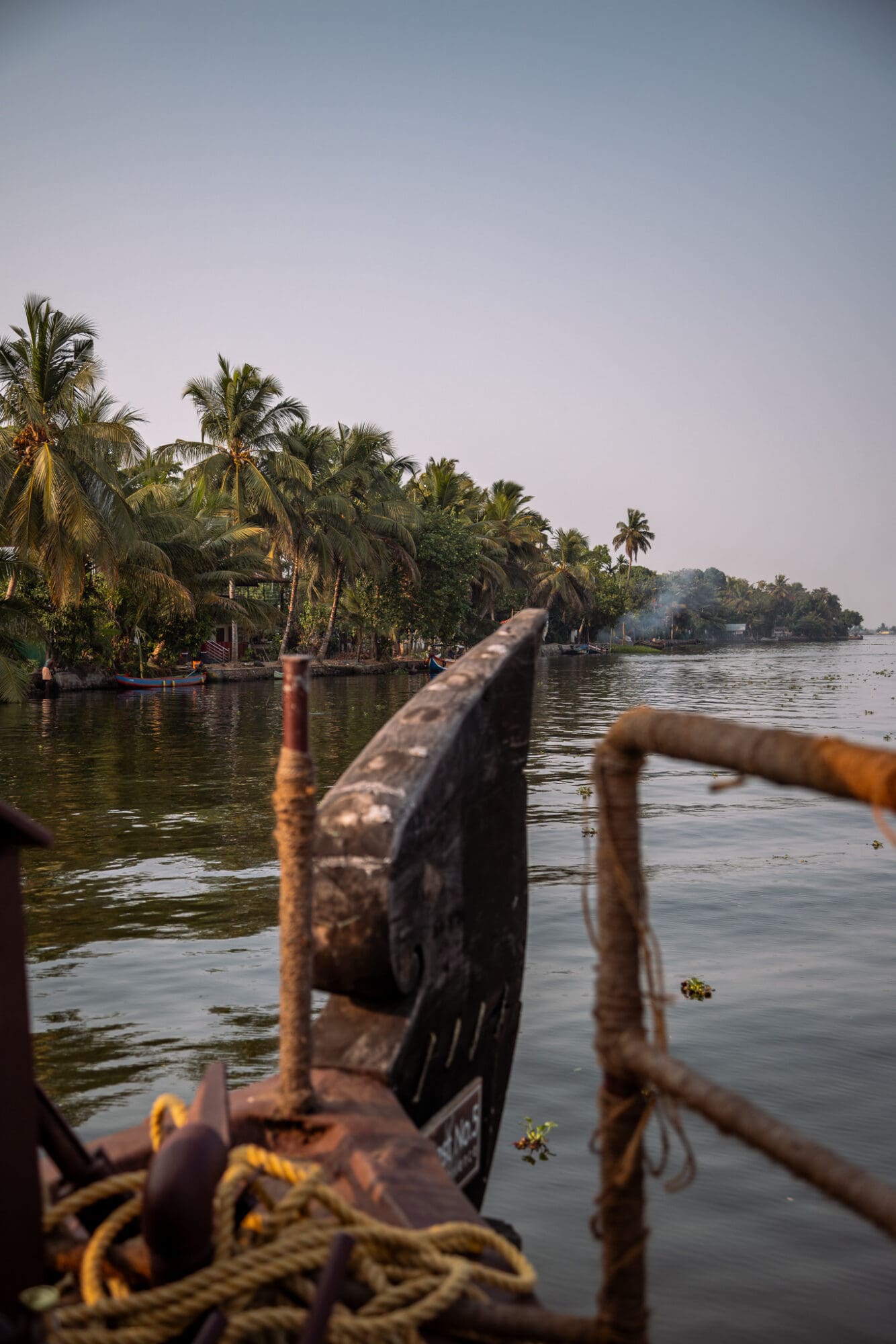
This is a guide that has been in the back of my head for quite some time, and is particularly close to my heart. Being half Keralan I'm horrifically biased, however I truly believe Kerala is one of the most beautiful places in India. The palm tree lined backwaters, where rustic fishing boats and traditional houseboats meander through endless waterways, are enough to recommend it. But then there are also the misty mountains of Munnar, the beaches of clifftop Varkala, and the culturally rich (and rather more pleasant than their bustling Northern counterparts!) cities of Kochi and Thiruvananthapuram (Trivandrum).
India is admittedly not the easiest place to visit. But with a little patience and some planning, you'll be richly rewarded. And Kerala is arguably one of the more visitor friendly destinations in the country, thanks to the laidback culture, friendly locals, and slower pace of life. I'm lucky enough to have visited Kerala a number of times over the years, over which I've been able to discover some firm favourites, from breathtaking hotel stays, to bucket list activities. Read on for my ultimate two week Kerala itinerary, featuring the very best highlights and things to do in God's Own Country.

Kerala 101
- Money in Kerala: The currency in India is the Indian Rupee (₹INR). It's worth having some petty cash on you for smaller destinations and purchases, but card is also accepted by many outlets. However, to get around with ease, I highly recommend setting up a UPI account. UPI is India's main method of payment, essentially allowing you to scan QR codes for vendors to pay for things. Everyone from big hotels and restaurant brands down to tuk tuk drivers have a QR, making fishing for change largely a thing of the past. It's a bit of a faff to set up, but so worth it. We used Mony, however I would exercise caution with how much you load your account with, as it took absolutely ages and lots of following up to get the excess amount refunded when we left. Altneratively, Wise recommends Cheq UPI and ICICI Bank iMobile Pay - if you try either of these, do let me know how you get on!
- Getting around Kerala: India has a well connected train system, making getting around the region fairly straightforward. You have two main booking options. There's 12GoAsia, which hosts all the most popular routes, however charges a hefty markup. Or, if you have the patience, you can set up an account with Indian Railways (this blog post outlines how to register). It's a faff, and the website isn't the easiest to figure out, but you'll have more route options, and be paying far less. On one train from Delhi to Agra we got chatting to a couple next to us, to find out they'd paid twice the price! Note: watch out for scams where people will try to tell you you've bought the wrong ticket and that you need to go buy a foreigner ticket, or similar. I nearly fell for it, bleary eyed and jetlagged, our first morning at Delhi airport! Within cities, Uber is readily available, and avoids the hassle of haggling.
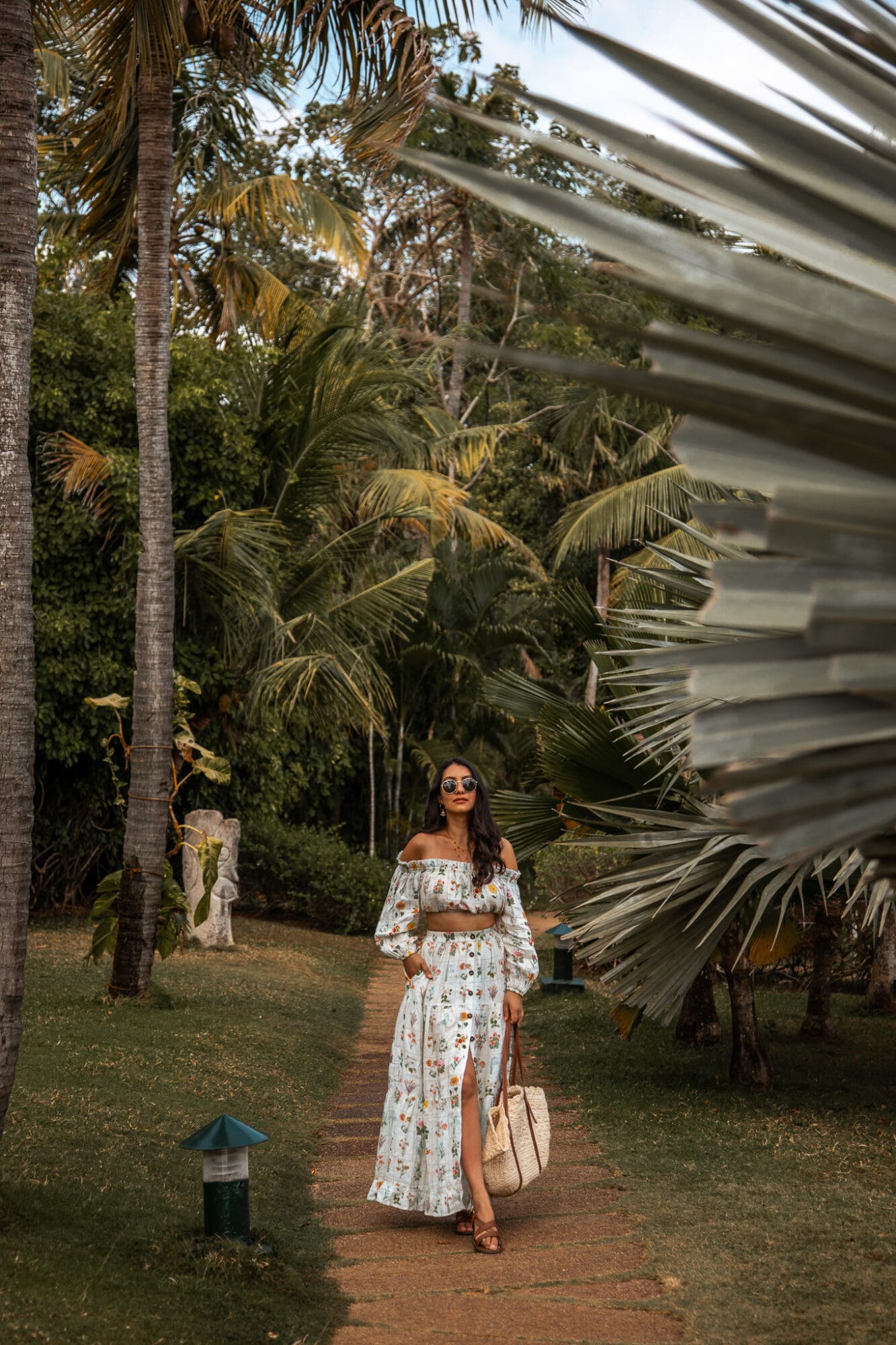
- What to pack for Kerala: India is a fairly conservative country, so for women I recommend packing clothes that offer more coverage. Think light, loose trousers, shirts, and maxi dresses, as well as a shawl for a quick cover up for any religious buildings. For the beaches, you'll rarely see the locals in swimwear, therefore you may feel more comfortable in a one piece or something with more coverage. The streets can be dirty, so sturdy, sensible sandals will be your best friend. I lived in my trusty birks!
Two Week Kerala Itinerary Overview
3 nights: See the sights and get your bearings in laidback Fort Kochi
3 nights: Head into the mountains to explore the vibrant green landscapes of Munnar
1 night: See the famous backwaters of Kerala by houseboat
3 nights: Take it easy at one of the region's many luxury resorts
2 nights: Cafe and beach hop at backpacker friendly clifftop Varkala
2 nights: Discover the temples and markets of bustling Thiruvananthapuram (Trivandrum)
Got an extra day or two? From Trivandrum, head to nearby Poovar for a spot more relaxation at a backwater resort. Or extend to three weeks, and explore the less traversed (but no less beautiful) coastline of Northern Kerala. If you're connecting your Kerala trip with further travel around the country, consider heading North to Goa, or East into neighbouring Tamil Nadu.
Want to distill this itinerary into one week? Do 2 nights in Fort Kochi, 2 nights in Munnar OR Varkala, 1 night on the backwaters, 1 night in a backwaters resort, and 1 night in Trivandrum (or back to Fort Kochi if your return flight is from there).
Kochi
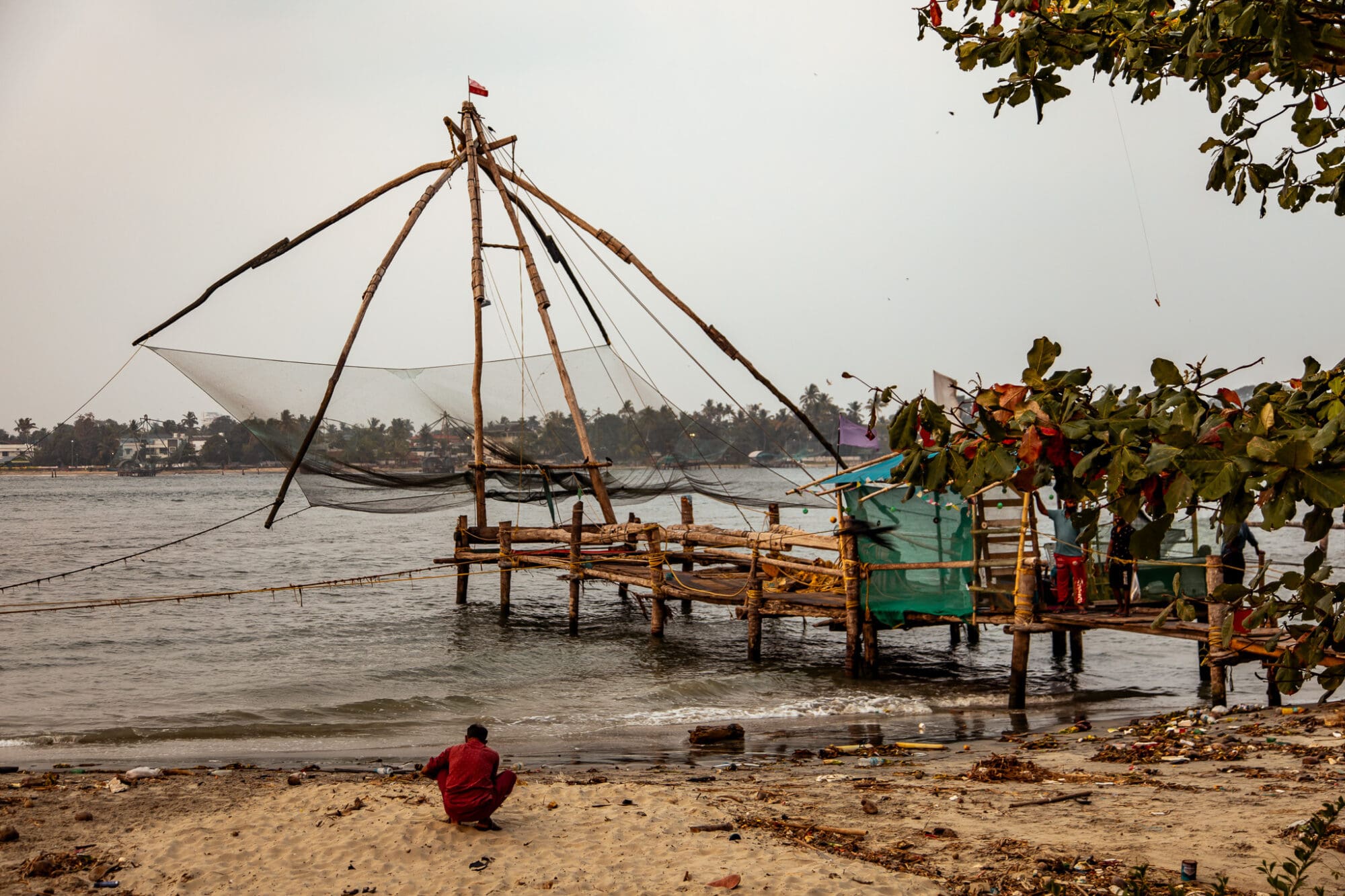
Kochi (formerly Cochin) arguably doesn't have the big tourist draws of some of the cities in the North. And yet, it manages to be one of my favourites. The tourist hub of Fort Kochi, sat overlooking the Arabian Sea, is clean, relatively calm, and pleasant to walk around - with actual pavements, a rarity! The architecture is unique to the city, with a blend of Dutch, Portuguese and British influences highlighting the region’s colonial past. There are some modest sights, including the city’s famous Chinese fishing nets, churches, and the old Jewish quarter. But beyond that, there’s a thriving cafe and restaurant scene, plenty of markets and souvenir shopping for local goods, and a low-key, relaxing vibe that makes it a great place to kick start your Kerala adventures.
If you're arriving into Kerala by plane, Kochi is one of the main airports to do so, with both domestic and international flights. It's also well connected via the country's train system, with trains coming into Ernakulam Junction station. Therefore, it's the ideal place to start your trip.
Things to do in Kochi
See a Kathakali Show
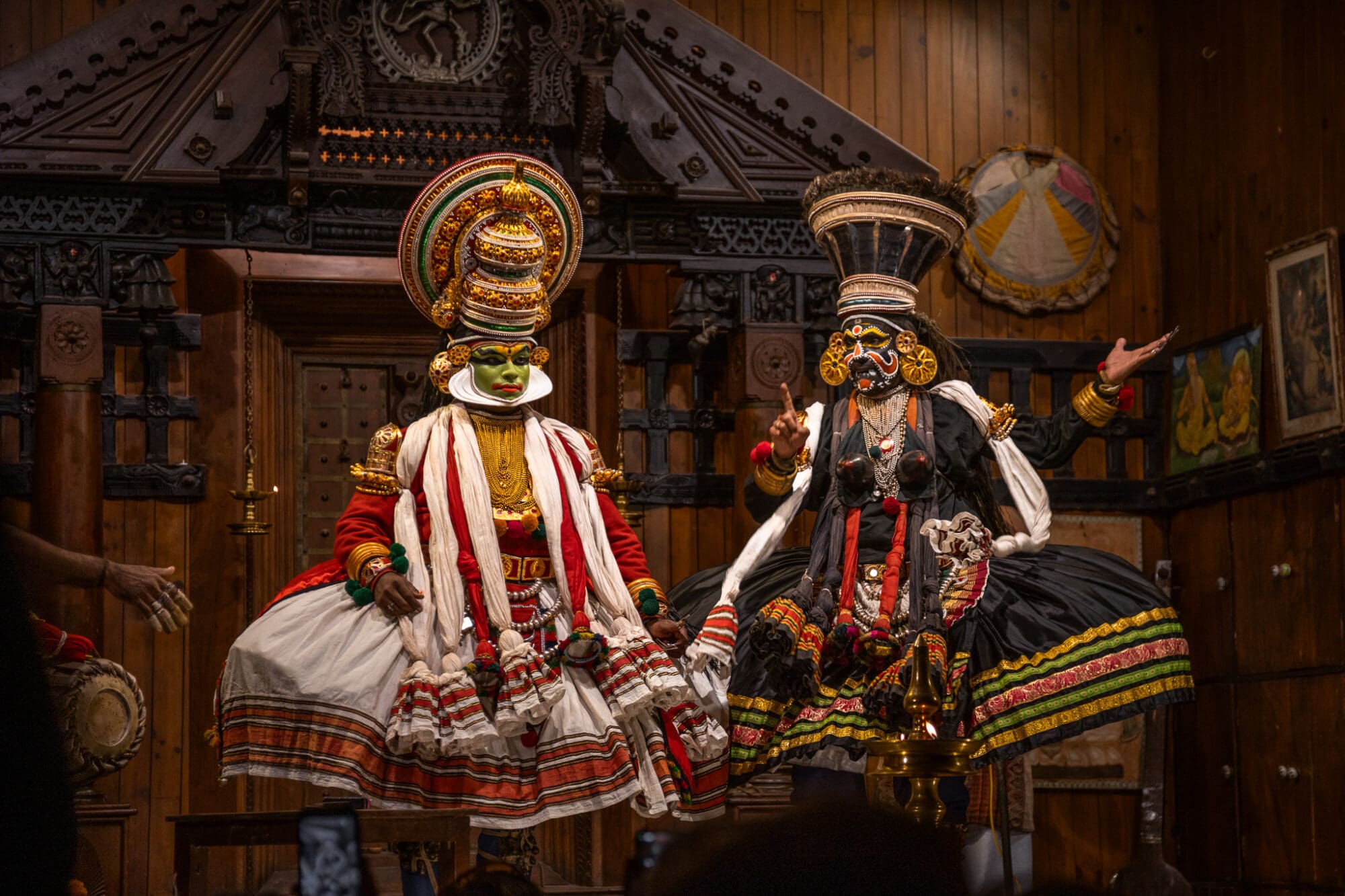
Kathakali is a form of traditional dance performance originating from Kerala, characterised by elaborate costumes, makeup, and expressive movements. What makes it such a unique experience is that much of the storytelling is told through facial gestures, paired with hand and foot movements. Epic tales are told through this fusion of dance, acting, and live music.
One of the best places to catch a show in Kochi is the Great K V Kathakali Centre, with nightly shows. Between 5 and 6pm, you can watch the performers apply their own makeup, with the show itself between 6-7pm. The show is catered to tourists, with explanations of the makeup, hand gestures, and the roles each character plays. They also hand out paperwork explaining the acts and storyline, which is helpful to follow if you find yourself getting a little lost! Tickets cost 600 rupees. If you're looking for further entertainment, they also host South Indian classical dance, music, and martial arts shows.
Visit Mattancherry Palace
This 16th century Palace in Mattancherry was built and gifted by the Portuguese to the then Raja of Kochi. Later renovated by the Dutch, it's also commonly referred to as the Dutch Palace. The exteriors, a blend of colonial and Keralan architecture, are fairly unassuming, but inside you'll find traditional Keralan murals, regal artefacts, and elaborate ceremonial costumes that all tell the tale of the region's royal past. The palace is open from 10am-5pm everyday except Fridays. It's a short walk from the Jewish Quarter, so I'd recommend combining the two.
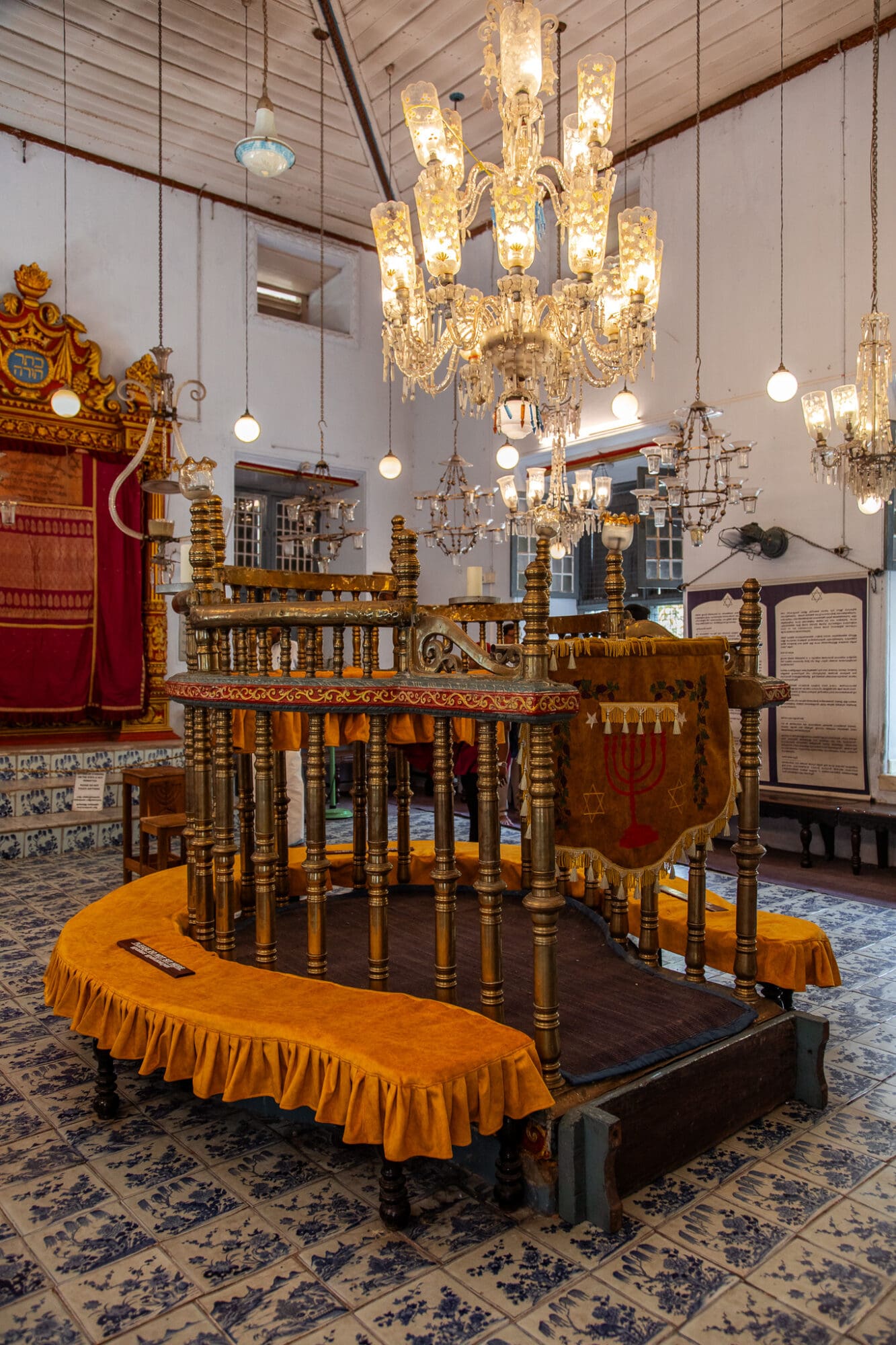
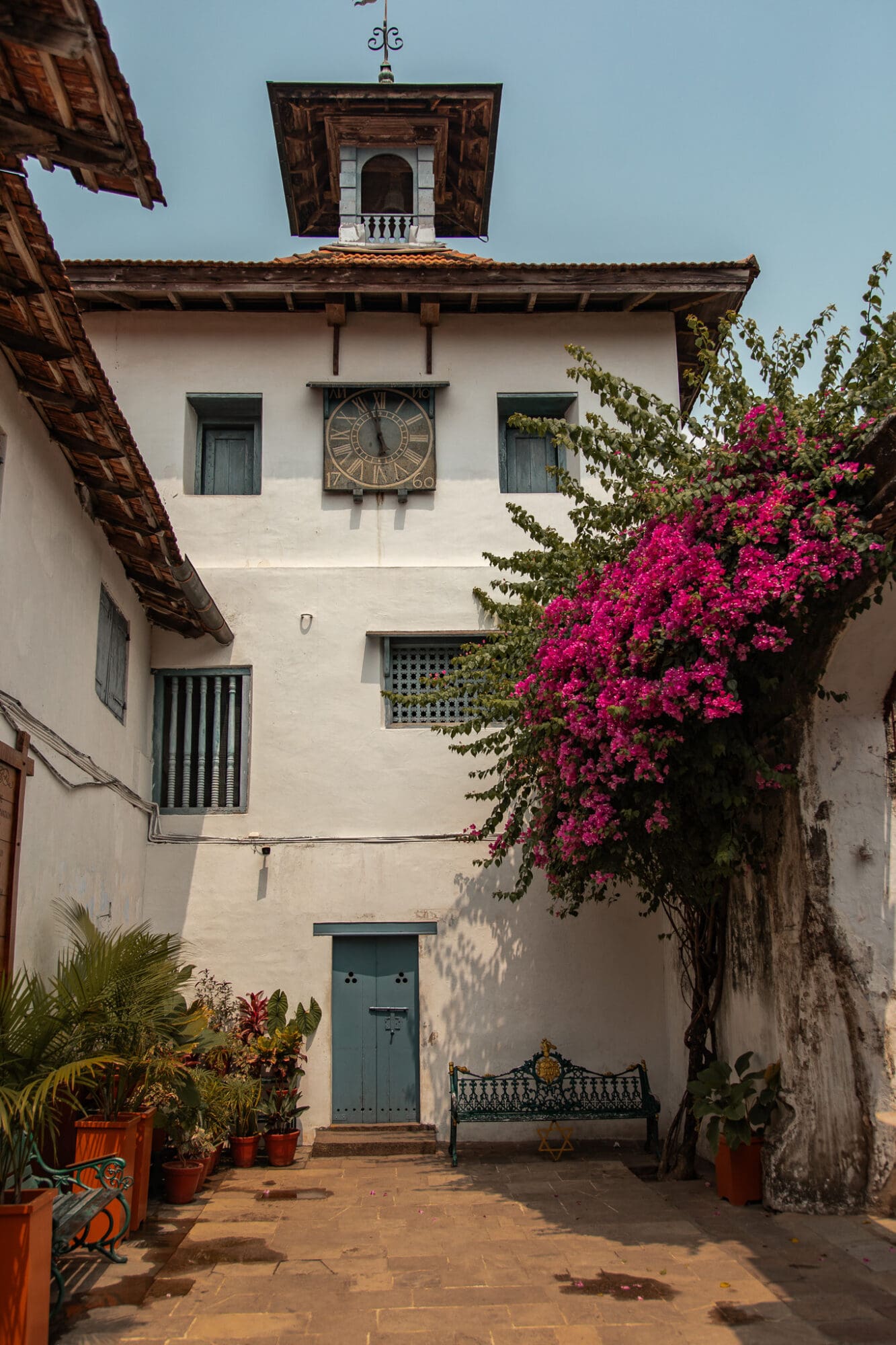
Explore the Jewish Quarter
Fort Kochi's unique legacy as a multi-cultural port town is perhaps best observed in the city's Jewish Quarter, home to one of the oldest Jewish communities in India. Though numbers are now dwindling, Cochin Jews settled in India all the way back in the 12th century. This picturesque enclave of cobblestoned streets in the Mattancherry area houses boutiques, souvenir shops, and notably, the 16th century Paradesi Synagogue. The synagogue is a colourful medley of architectural and design styles, boasting Chinese tiles and Belgian glass chandeliers, and offers further insight into the history of the community and area. If you're an antiques lover like me, there's a number of antiques stores in the surrounding area, with plenty of weird and wonderful traditional home furnishings and decorative objects to explore.
The Chinese Fishing Nets
Fort Kochi's rich cultural tapestry is further evidenced by the Chinese fishing nets that line it's waterfront. These nets are believed to have been introduced by Chinese traders from the court of Kublai Khan in the 14th century. Working on a unique balance and lever system suspended from bamboo poles, they're an impressive sight to behold. A wonderful symbol of Kochi's maritime heritage and role in Eastern trade connections, they've also become a popular tourist attraction and photo opp. For a small fee, the fishermen may allow you to try the system for yourself, and take some snaps.
Where to Stay in Kochi
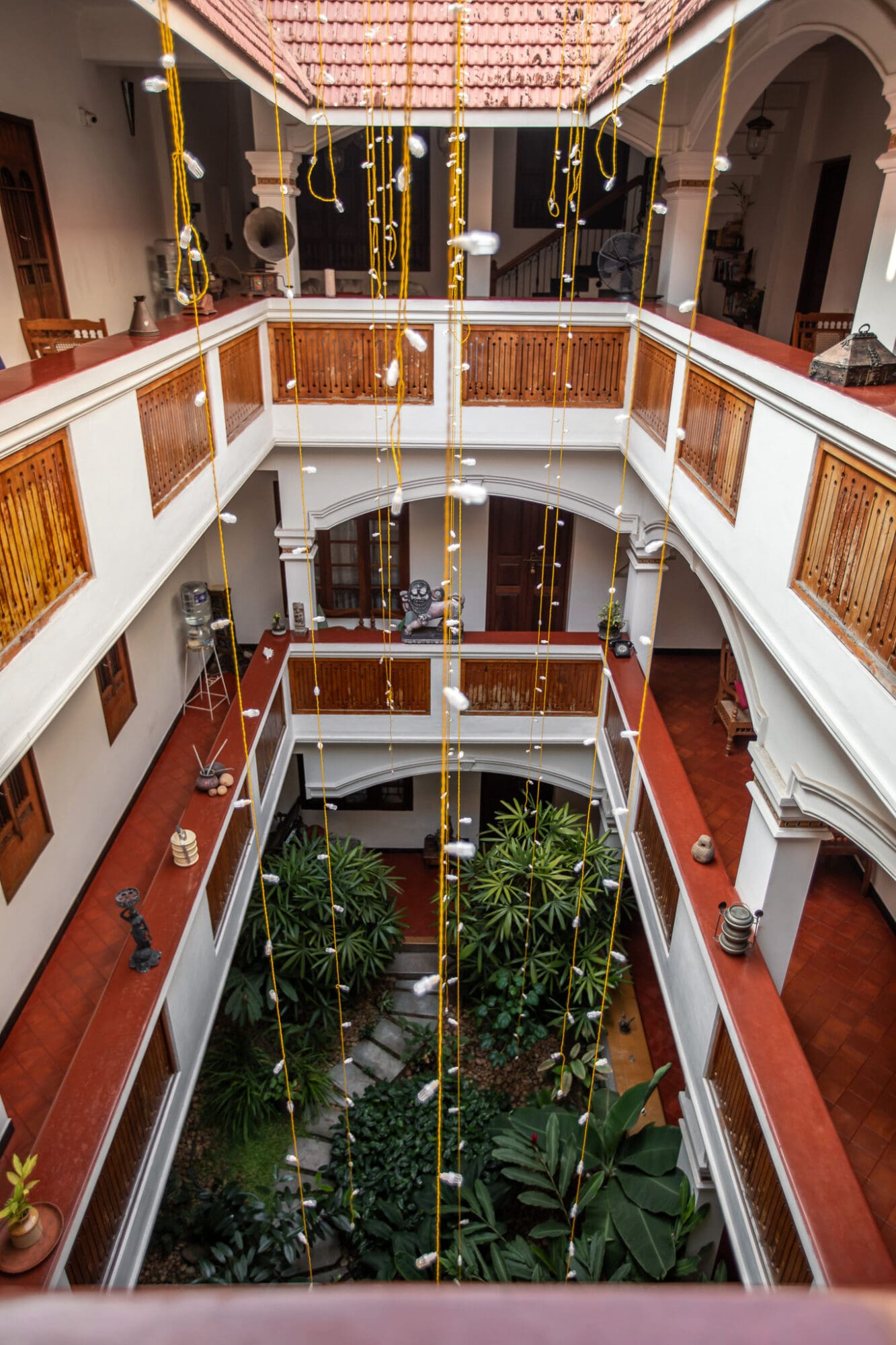
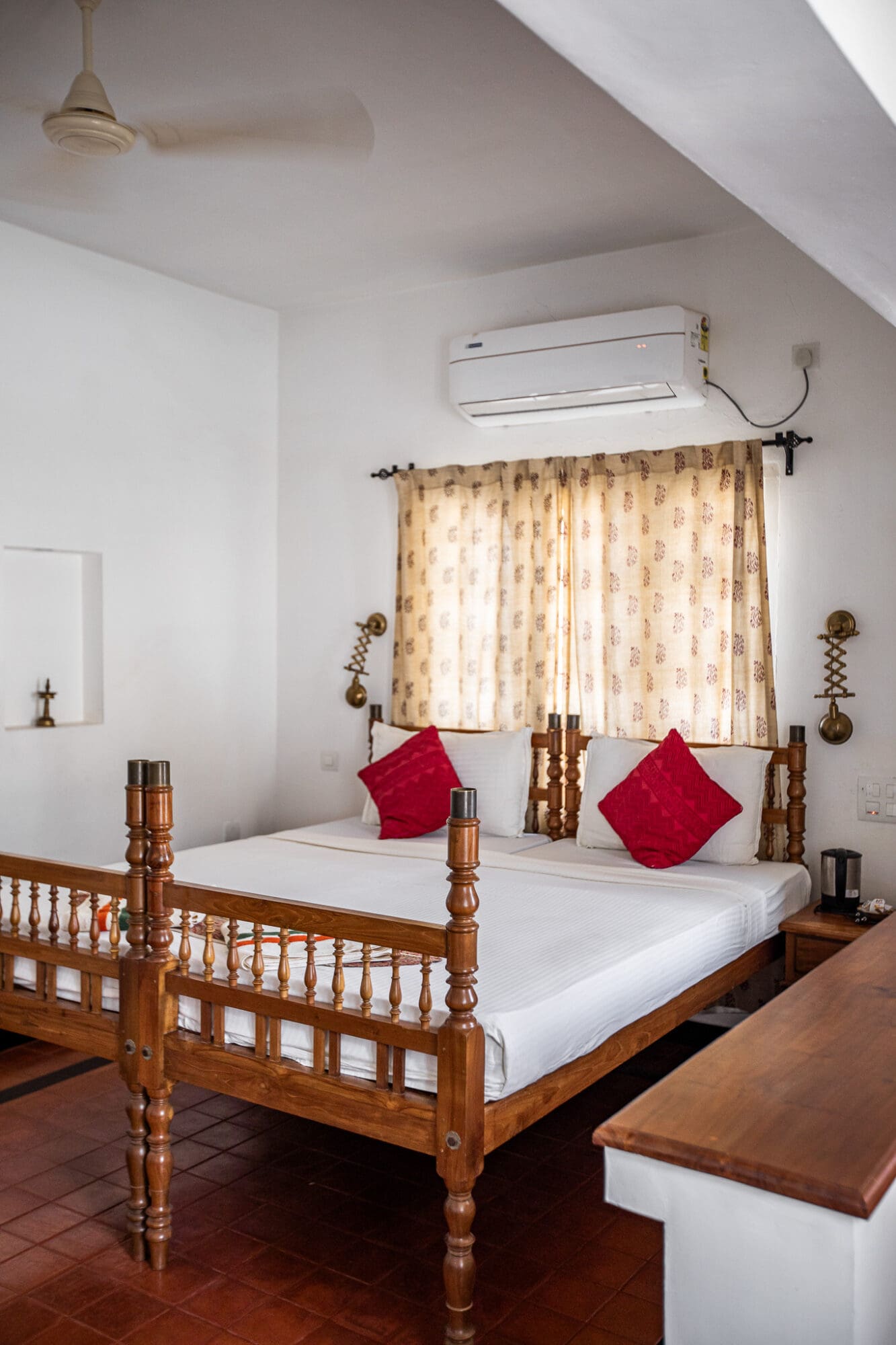
One of my favourite homestays in all of Kerala is The Fort Bungalow in Kochi (pictured). It’s situated in the heart of Fort Kochi within walking distance of all the main sights, yet set back on a residential backstreet so as not to feel too hectic. The hotel is set around an open foliage-filled courtyard, with simple, traditionally decorated rooms. It’s not perfect - for instance the sheets are a tad worn, and the toilet flush is rather weak - but it’s a lovely stay with warm Keralan hospitality, and you couldn’t be better placed for seeing the city.
Another more budget homestay a bit further out of the main Fort area (but still just a ten minute auto ride away) is Jasmin Villa. It's a no frills stay with a lovely family. The rooms are simple but clean and comfortable, and Jasmin cooks up wonderful local dishes as well as offering Keralan cooking classes.
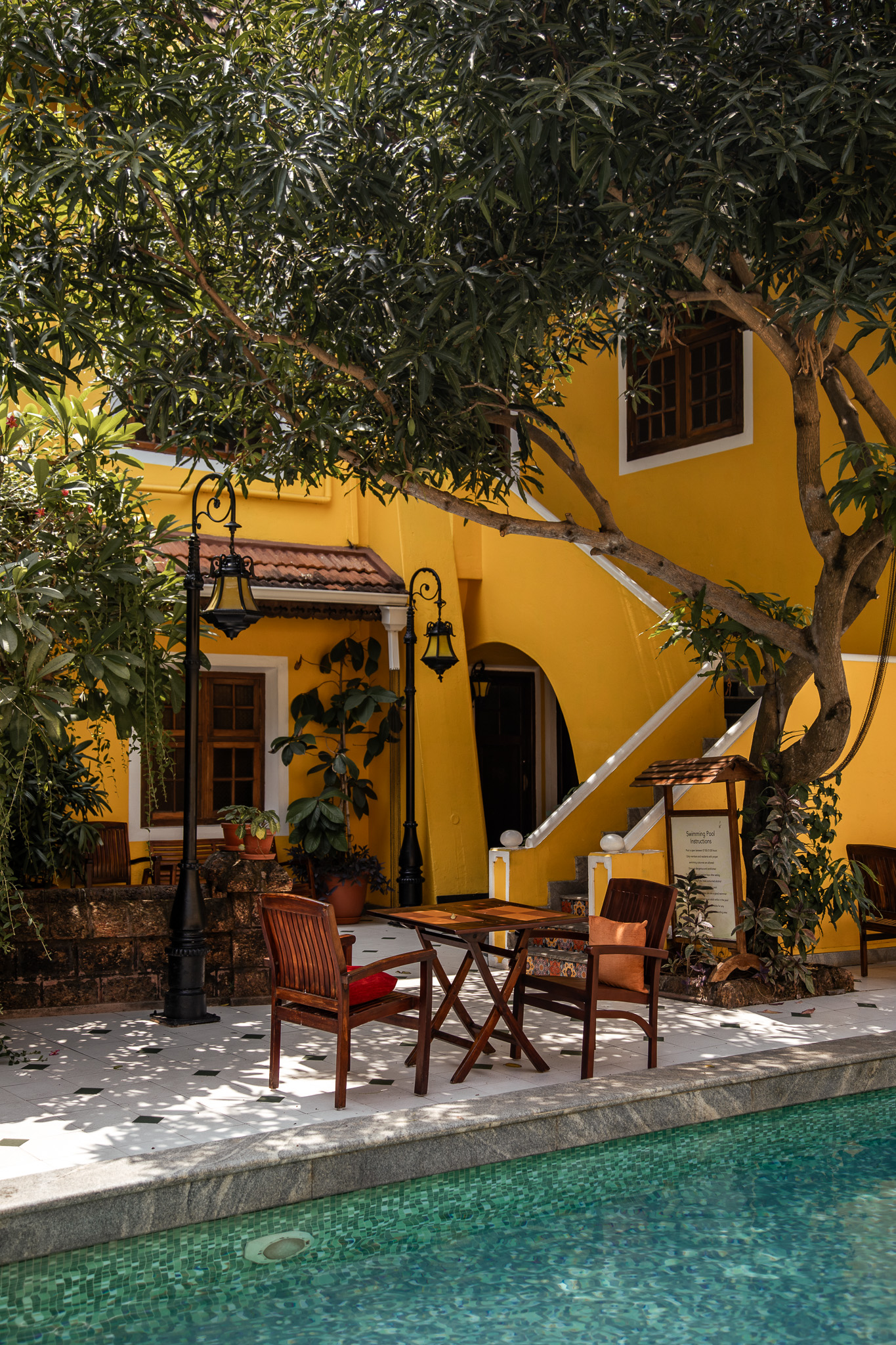
If you're looking for a more high end stay, Fragrant Nature is a Kerala based hotel brand with a grand luxury property in Kochi. Or consider Forte Kochi, in the heart of, you guessed it, Fort Kochi. The property is very traditional, drenched in bold yellow hues against dark Kerala teak, and there's a rather gorgeous courtyard pool area.
Restaurants and Dining in Kochi
Warehouse Cafe
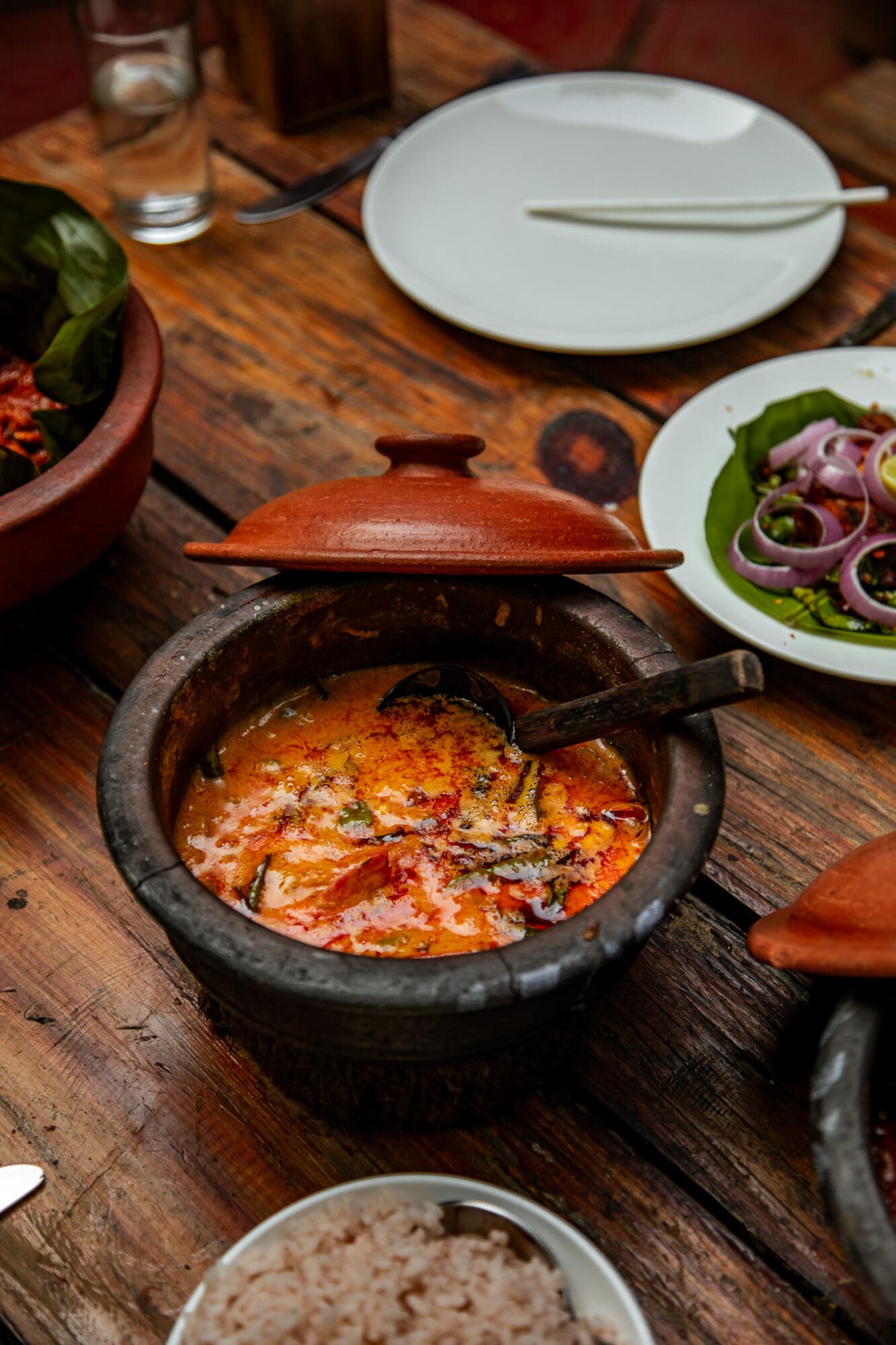
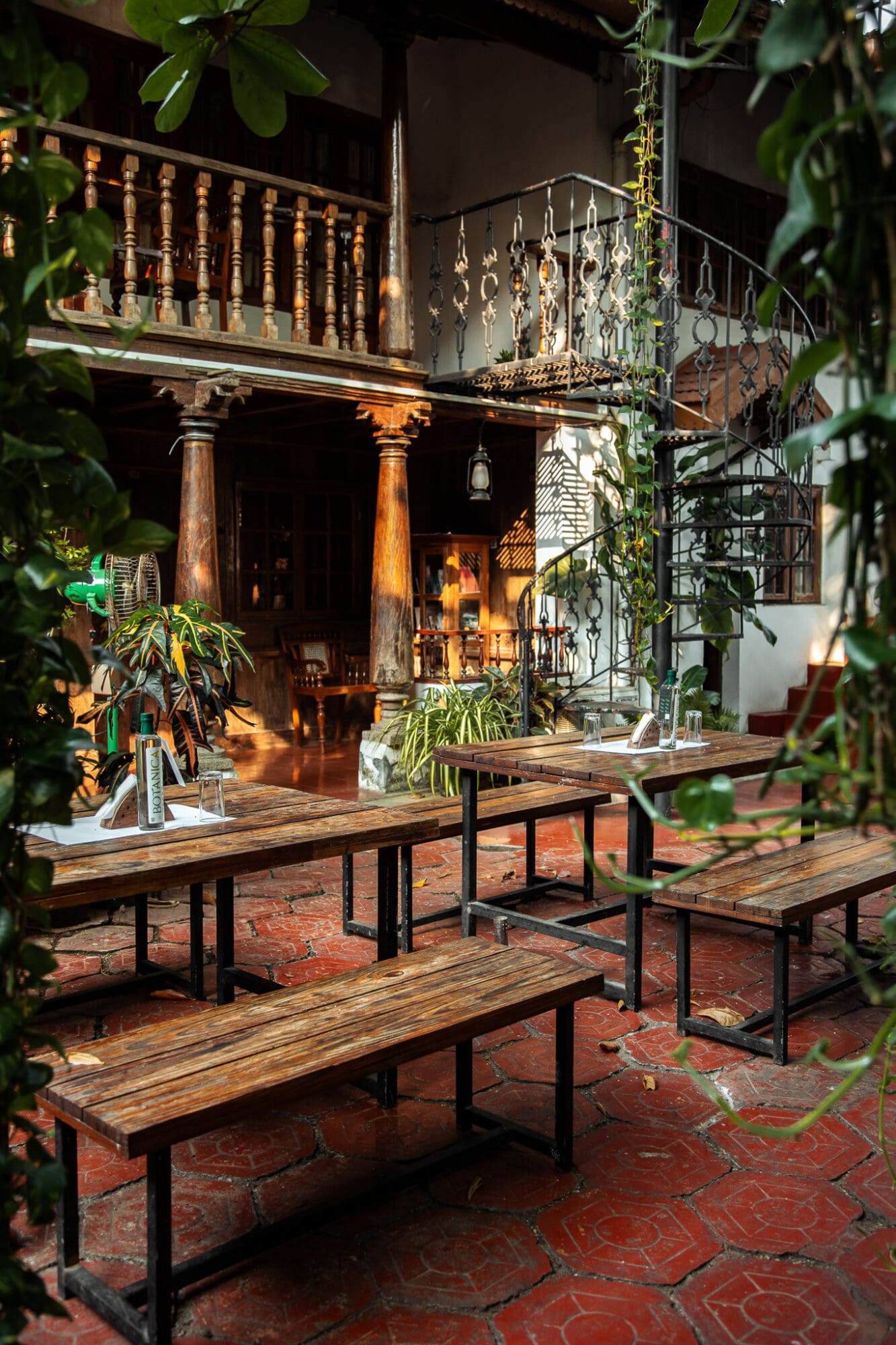
One of my very favourite meals from throughout the whole of Kerala was at Warehouse Cafe in Fort Kochi. Part of 300 year old heritage mansion turned hotel Rossitta Wood Castle, the restaurant is hidden in plain sight in the heart of the city. Tucked away in a foliage filled courtyard, it's an atmospheric space that feels like a uniquely Kochi experience. But it's the food itself that really shines, with a menu of local Keralan delicacies. A focus on fish and seafood, brought to life through rich, flavoursome curries, makes this a wonderful introduction to the region's vibrant cuisine.
Lila Curated Experiences
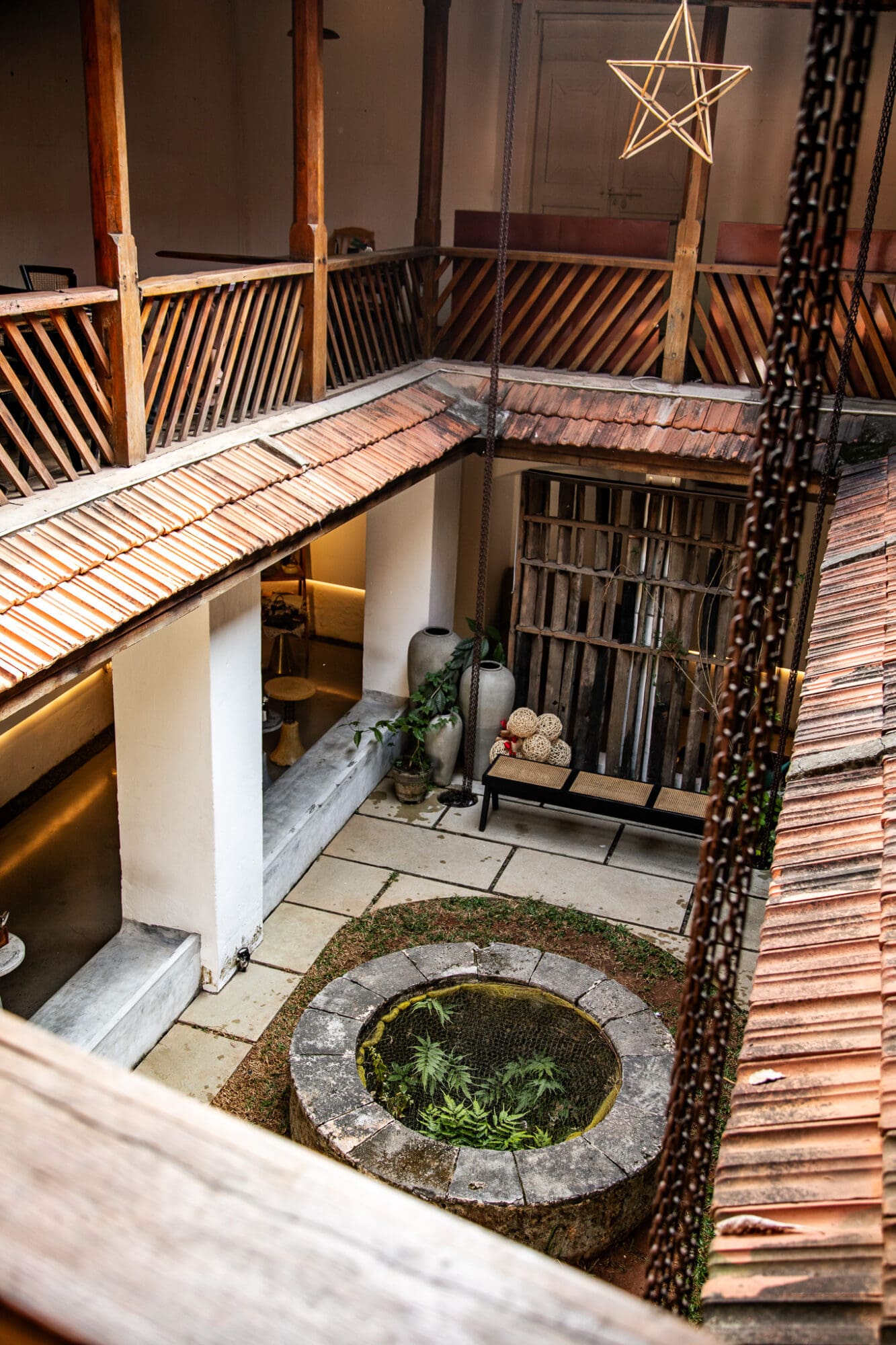
Fort Kochi is home to thriving cafe culture, housed in the many beautiful colonial buildings that make up the area. One of the most elevated of these can be found at Lila Curated Experiences, a mulit-purpose art gallery and cafe sprawled across multiple floors of an elegant 400 year old heritage space.
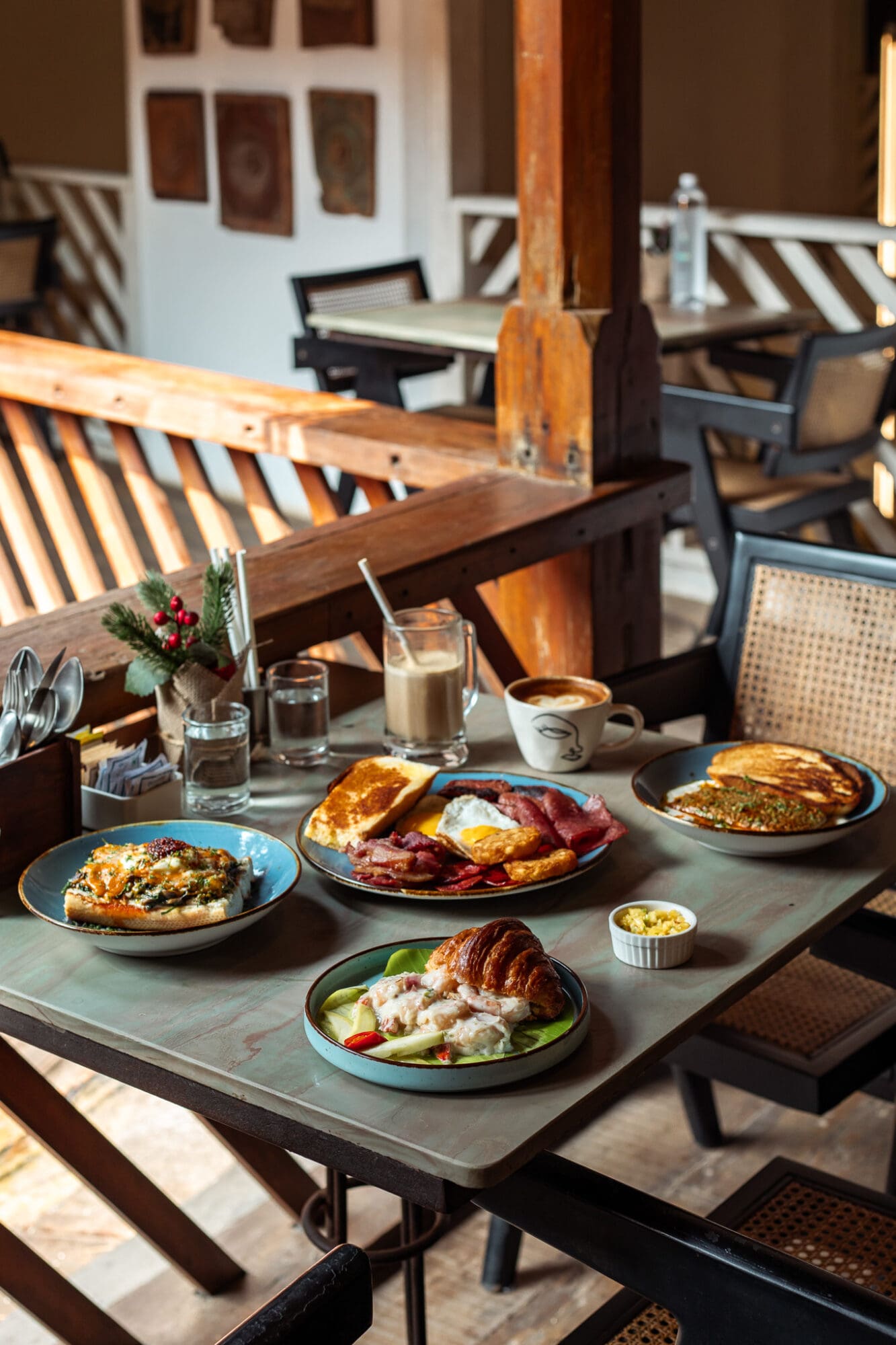
The menu aims to showcase the diverse culinary heritage and tapestry of cultures that have made their mark on the region, culminating in a unique fusion of cuisine styles and dishes. We visited for breakfast, drawn in by the sheer range of the offering. There are smoothie bowls, a number of egg dishes, sandwiches and burgers, plus a healthy selection of bakery and patisserie treats.
The name "curated experiences" certainly invites high expectations, and the dishes on first sight do not disappoint, with stylistic plating that more than justifies the rather leisurely wait time. Thankfully, the fare is not all style, no substance. There are playful twists, such as the Kandhari prawns served in a butter croissant. We also tried a tofu dish (unfortunately, the exact name escapes me) that so completely transformed the ingredient that it had me seriously questioning my usual reluctance with tofu.
The prices are on the higher side, however for the sheer variety of choice and elegant twists on staple dishes, it's well worth it.
Jetty at Forte Kochi
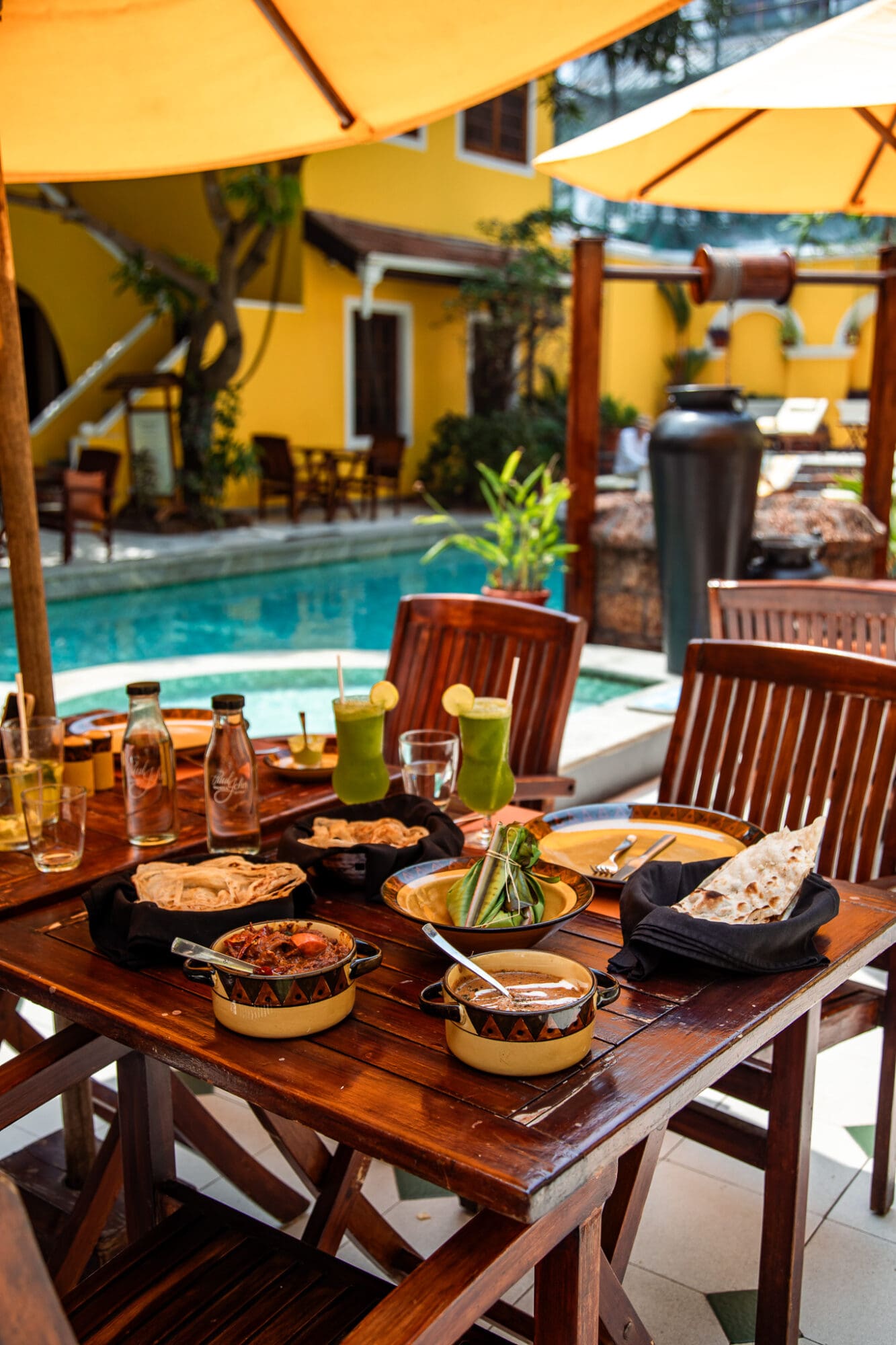
Though we didn't end up staying at luxury heritage hotel Forte Kochi, we did stop by for lunch at their restaurant, Jetty. There's a dimly lit, dark wood-lined dining room blasting aircon, however we decided to brave the heat and enjoy their alfresco poolside patio. In hindsight, probably a better choice for dinner as the sun is dwindling, however we were still kept relatively cool thanks to the swathes of large yellow umbrellas. The menu is classic Kerala fare as well as select hits from further afield, with plenty of fish, meat, and veg choices. They also offer thali's, a classic South Indian dish made up of multiple bite size samplings of curries, pickles, and rice, as well as heaving platters of fresh fish and seafood. It's definitely more of a treat yourself meal, but a delicious dining experience in sumptuous surrounds that feels like stepping back in time to the Kochi of eras past.
Munnar
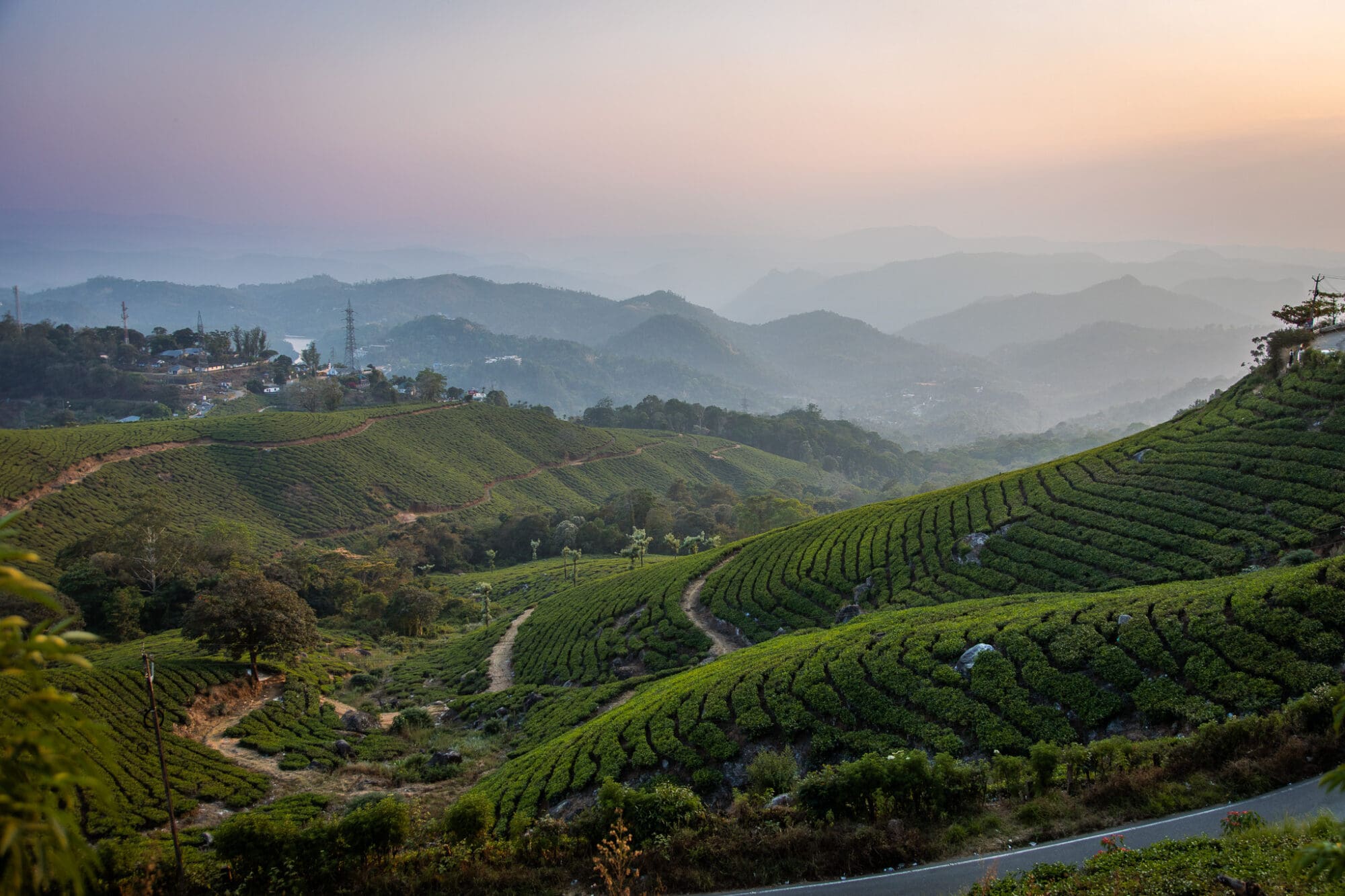
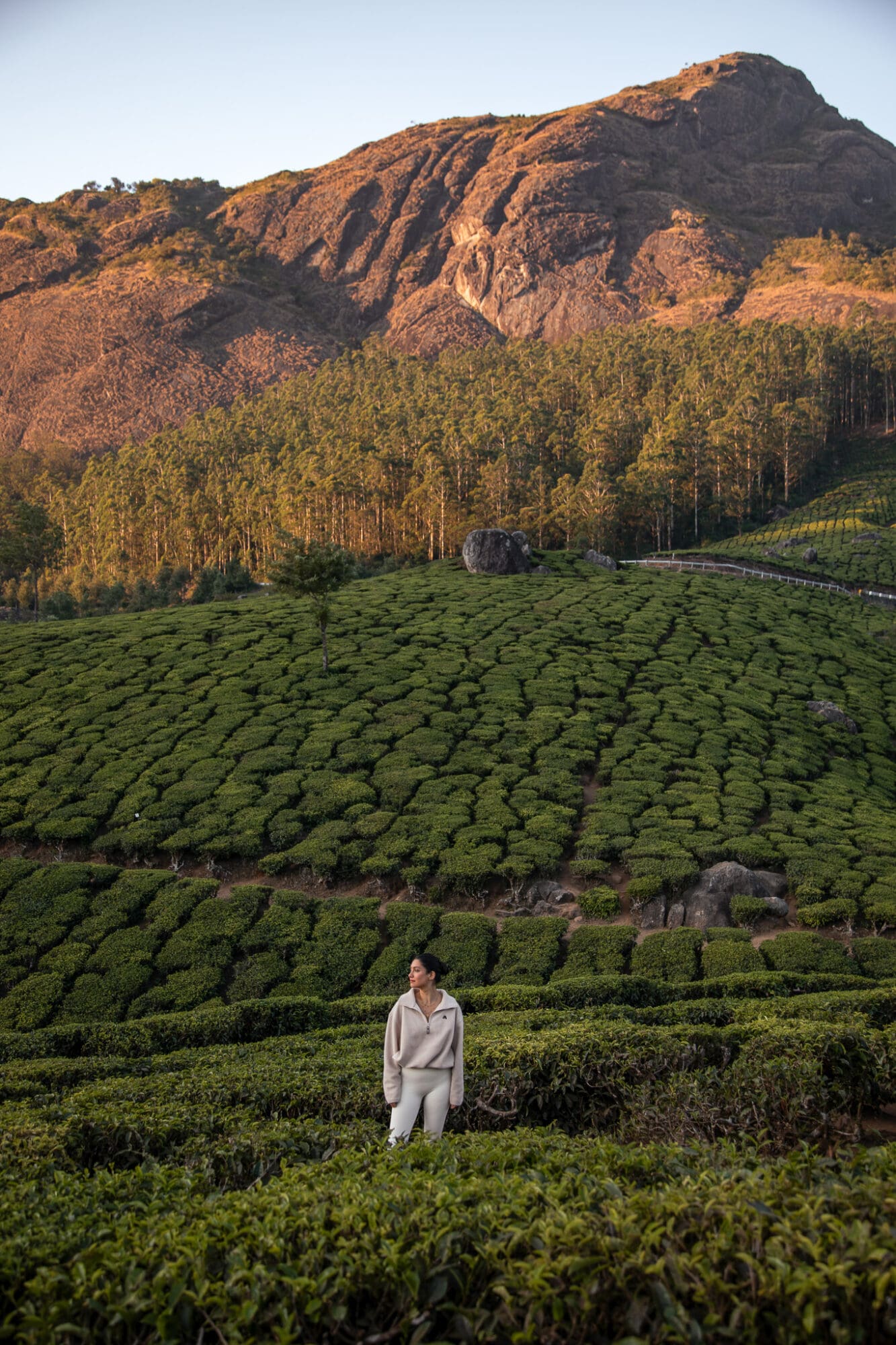
Whilst the majority of Kerala's draws lie along it's lengthy stretch of coastline, Munnar makes a compelling case for heading inland. Set on the border between Kerala and Tamil Nadu, this mountainous hill station offers some of the state's most striking landscapes. Previously offering an escape from the heat for British colonials, the region is famous for it's rolling tea plantations and moody mist-soaked valleys. It's an excellent place for hiking, as well as discovering the heritage of India's tea industry. Or, take it easy at one of the many picturesque hotels with a view.
Getting to Munnar
Munnar is a trickier part of Kerala to get to, as it's several hours inland from the coast. There are no trains to the area, and whilst there are buses, they're quite limiting in terms of what you'll be able to see. Therefore, I would recommend either looking at joining a group tour, or hiring a car and driver.
The latter may sound extravagant, but is a fairly common way to see the region. It's also nowhere near as extortionate as one might expect - we paid around £30 a day for three nights. The rates are usually calculated with a flat day rate for a certain number of km, then a further rupee charge per km beyond this. The driver will usually have his own accommodation and meals sorted - however it's polite to offer tea or coffee, or cover a meal if you stop during a drive.
Our driver Aneesh was brilliant - he knew the area well, was able to take us to all the good spots, and was far more competent manoeuvring the mountain roads than we would have been. You can reach him at +91 944 719 5688. Of course, you could drive yourself, but Indian roads are pretty crazy, so I would only consider this if you're a very confident driver!
Where to stay in Munnar
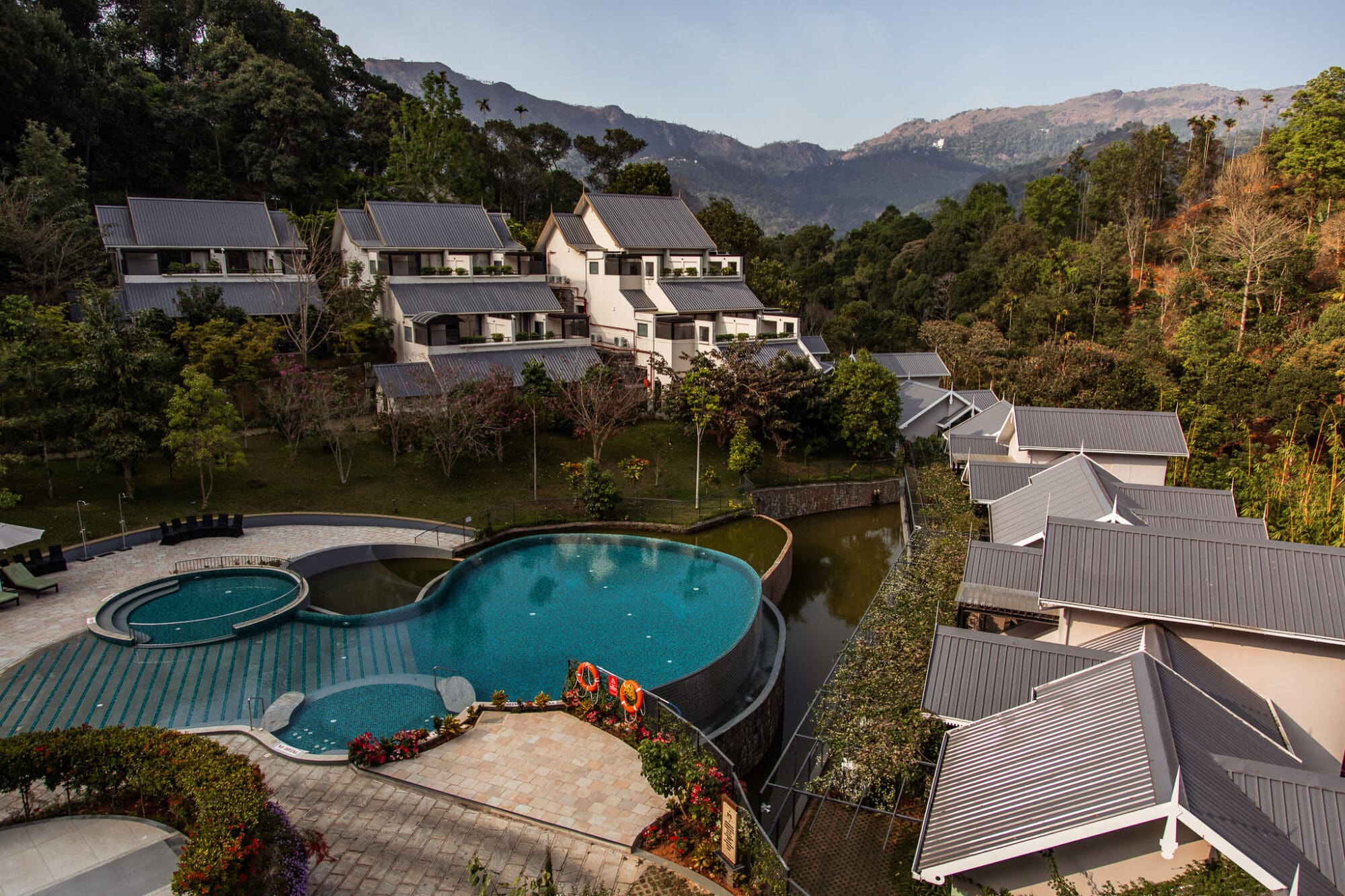
We stayed at Scenic Munnar, a modern, well furnished property complete with a spa, pool, and fitness centre. Spacious rooms are sprawled throughout a rambling space tucked away in dense foliage, and overlooking mountain views. It's suitably remote to fully appreciate the beauty of the region away from the crowds. However, there's plenty to keep you occupied, with an on-site restaurant and regular evening entertainment. I was actually a little under the weather whilst staying here, but lazing by the pool, interspersed with trips to the spa, kept me plenty amused!
A more budget friendly, well reviewed option, is 31st December Farms And Estates Munnar, which has beautifully rustic Kerala-style interiors in a remote, peaceful setting. Or consider Le Montfort Resort, with equally traditional decor set against a breathtaking mountain backdrop.
Things to do in Munnar
Visit the Tea Plantations and Tea Museum: The area is full of different tea plantations that are open to visitors, such as the Tea Gardens and Kolukkumalai, known as the highest tea plantation in the world. Learn about the regions tea manufacturing heritage at the Tea Museum and Lockhart Tea Factory.
Visit Top Station: Technically over the border in Tamil Nadu, however Top Station is known for it's panoramic views out over the Munnar region. Head up for sunrise or sunset for picturesque skies.
Eravikulam National Park: A wide expanse of green space with waterfalls and wild goats. It's suitable for trekking, such as the trails up Anamudi Peak, or there are safari vehicles and buses available.
Spice Plantation Tour: You'll no doubt pass some of the many spice gardens open for tours around the region. A guide will take you through the gardens, explaining the traditional medicinal qualities in Ayurvedic medicine, before you'll inevitably end up at the gift shop should you wish to purchase said products.
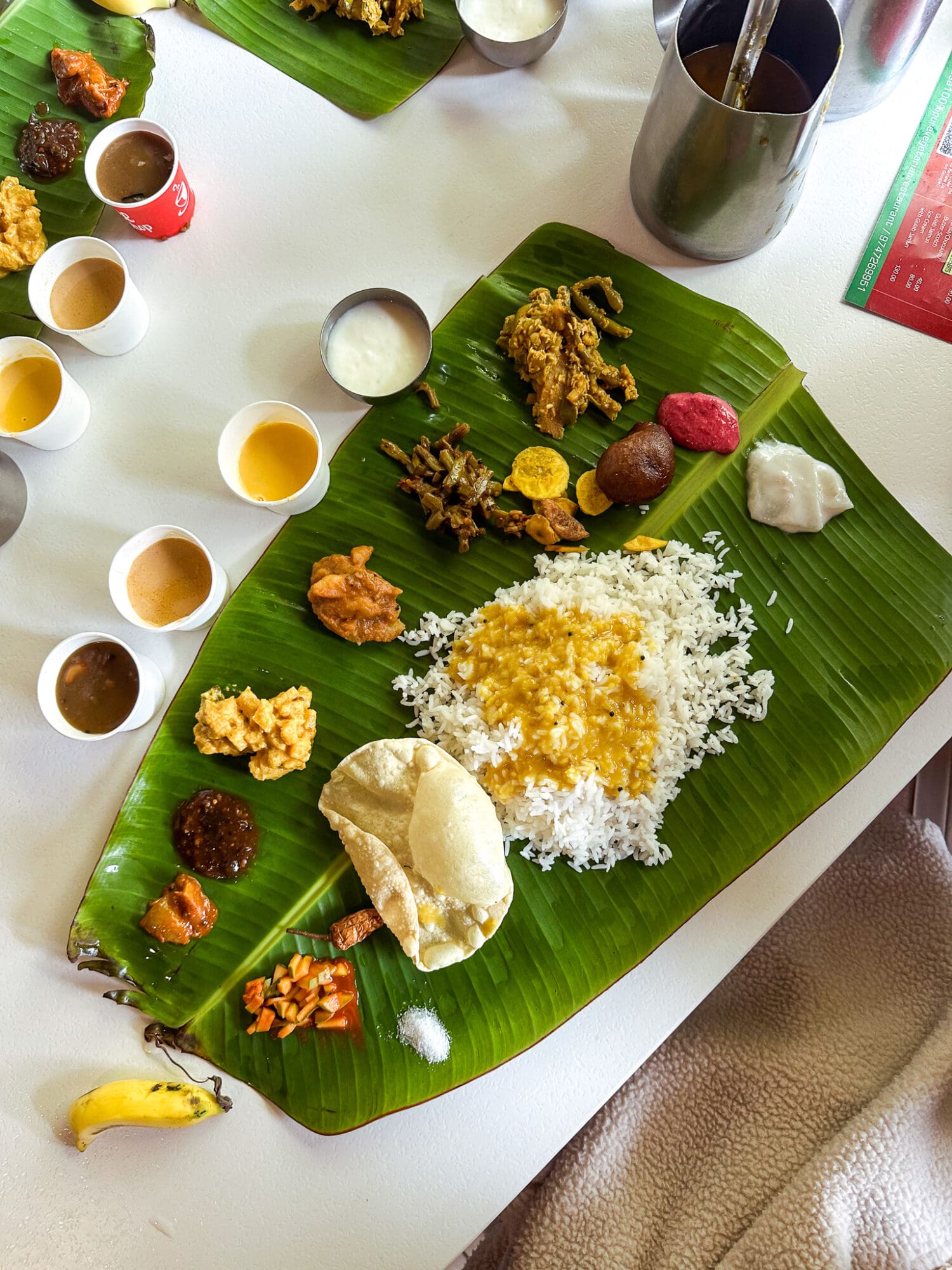
Eat a traditional Kerala banana leaf meal: You'll encounter numerous no frills canteens serving up a Kerala staple of rice and curries on a banana leaf. You'll be given a leaf, and servers will come round with rice, curries, chutneys and pickles, which will all be heaped on to your leaf. Don't expect cutlery - but that's part of the fun! There's usually veg and non veg options, and they're generally very good value with unlimited top ups.
The Kerala Backwaters
Houseboat on the Kerala Backwaters
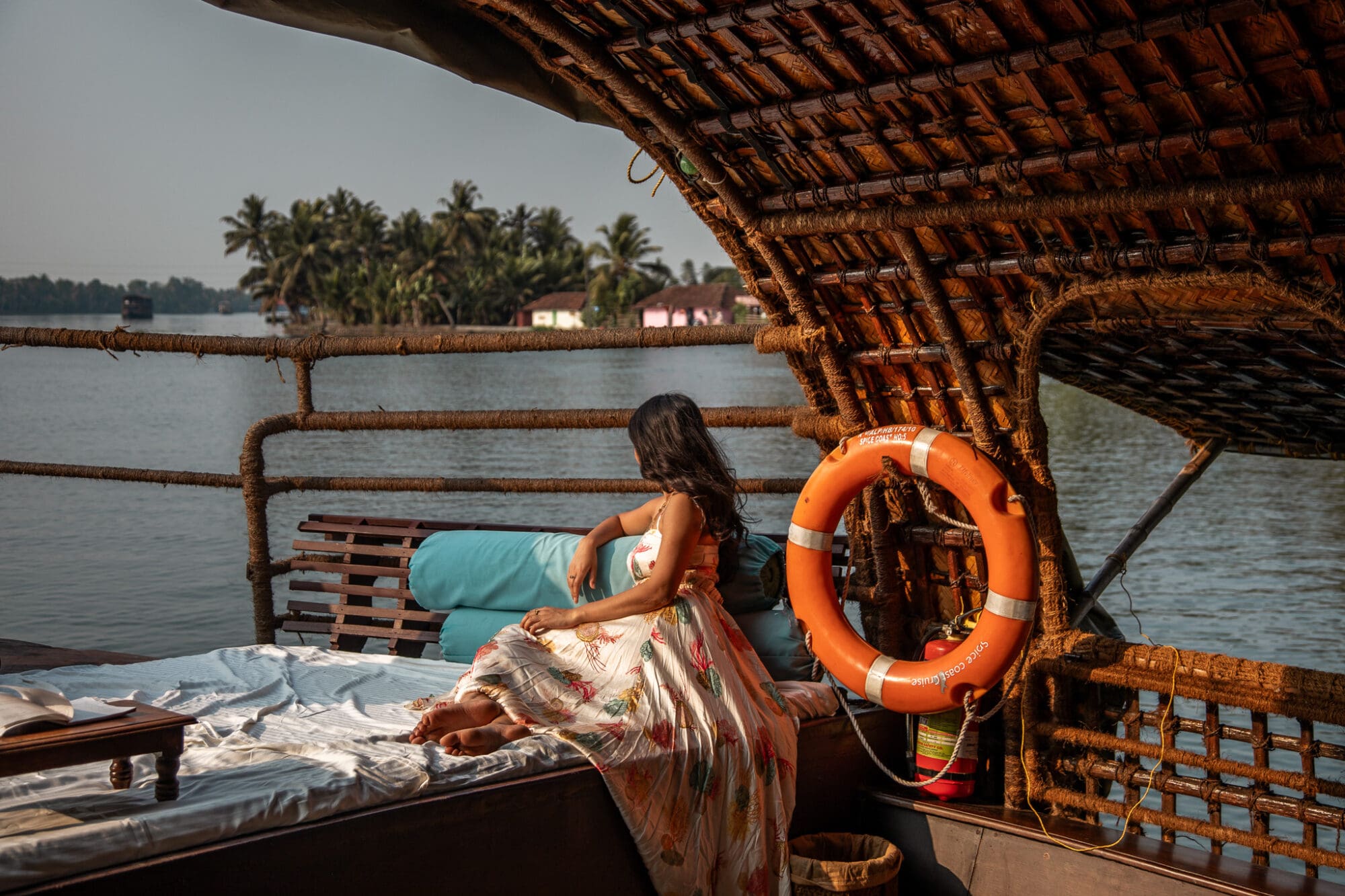
Despite being to Kerala countless times, I’d never before done a houseboat on the backwaters. For context, this is an iconic Kerala experience, one of those “must do” bucket list activities that will be top of any list or guide. I’ll admit, I thought it would be overrated. My past experiences of the backwaters had largely been far from peaceful, rammed with party boats loudly blasting karaoke, complete with dodgy flashing lights.
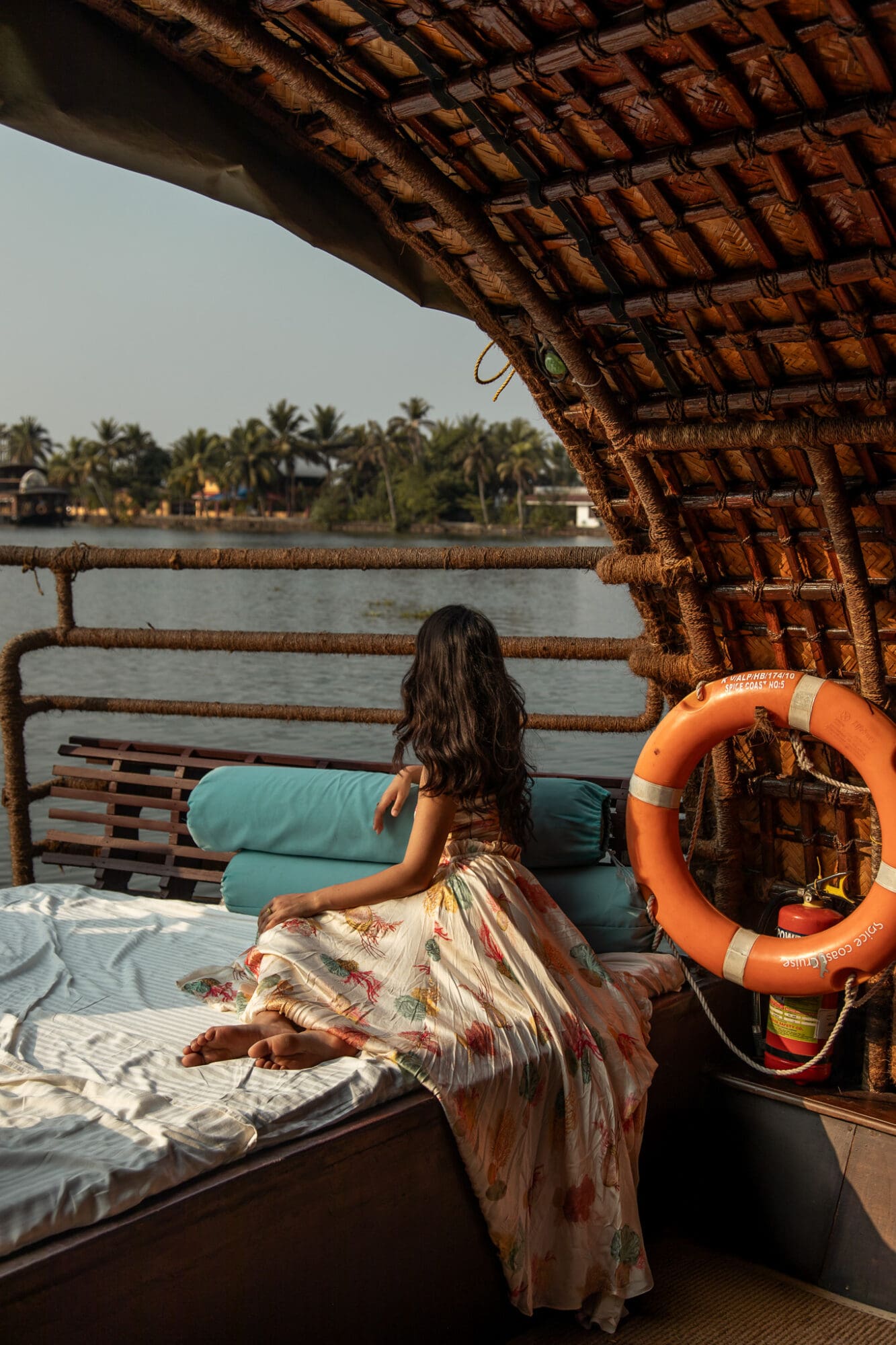
But this time round, I decided it was finally time to tick it off the list. There are a plethora of options - day cruises, overnights, and two night boardings. We did a lot of research to find a boat that felt like the right fit (any signs of cheetah print or neon were an immediate veto), finally settling on Spice Coast Cruises. It was simple, homely, and comfortable - with no karaoke machine in sight. The interiors are rustic, sympathetic to the local architecture styles and also the boat itself - dark teak furnishings, minimal rooms with beds swamped under a canopy of mosquito nettings. I appreciate its purely for function, and yet it looks so stylish.
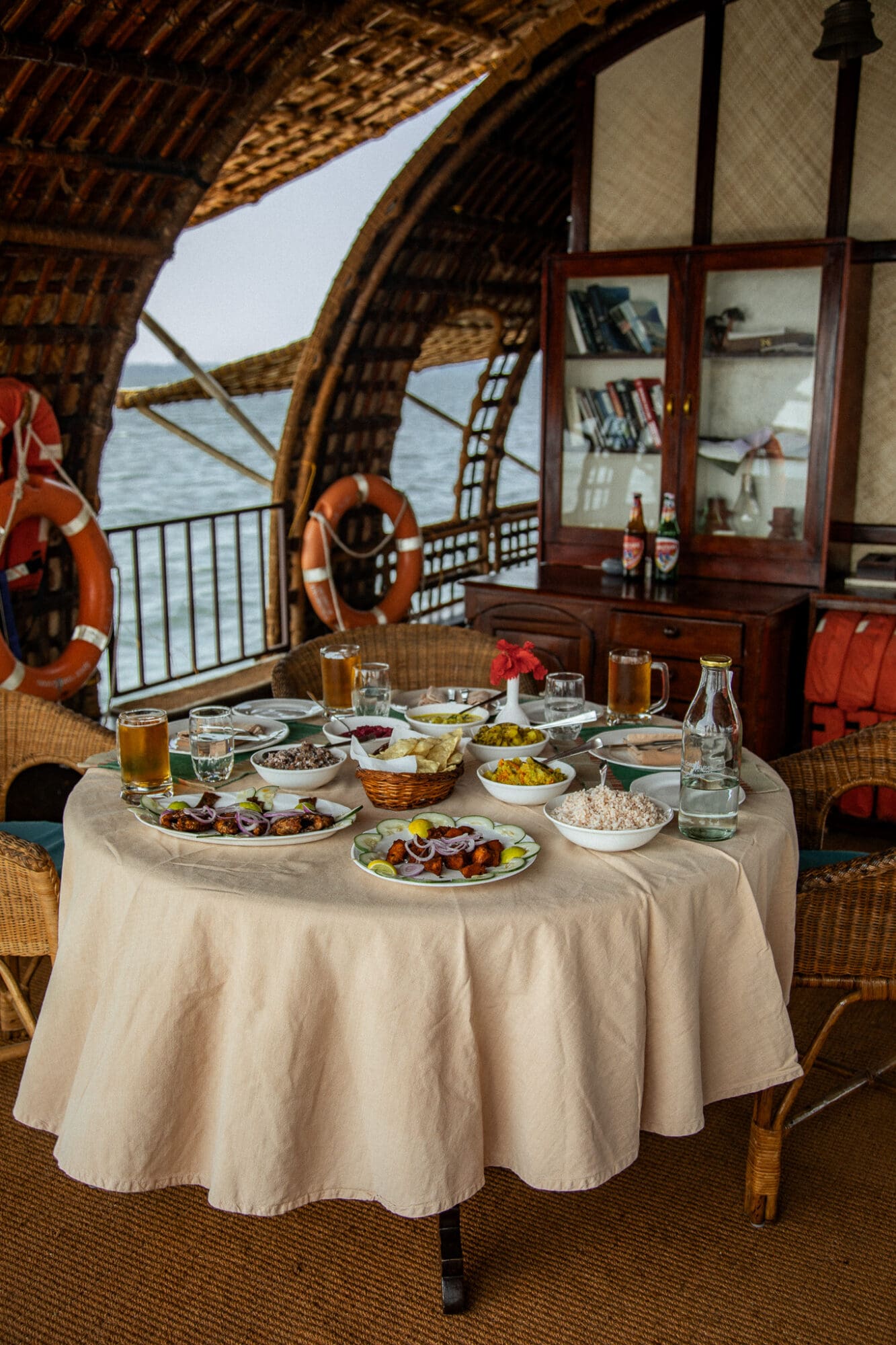
Long story short, it turns out I was completely wrong about everything. There’s a reason why the overnight Kerala houseboats are popular - it’s a truly incredible experience. We trundled by people hanging up washing, playing in the shallows, living their daily lives along the riverbanks, whilst we feasted on fresh fried fish, rice and curry prepared by our on board chef. The boat is manned by three staff members - a cook, caption, and crew (although the latter two regularly swap roles). Between meals, we were regularly plied with snacks and treats, like banana fritters and freshly blended juices.
At night, we tucked into a quiet spot on the backwaters, to wake up to coffee with a side of sunrise the next morning. It was completely blissful, and had me questioning why I’d put it off for so long. In fact, it was possibly the best experience of the whole trip.
Kerala Backwaters Hotel Spotlight: Taj Kumarakom
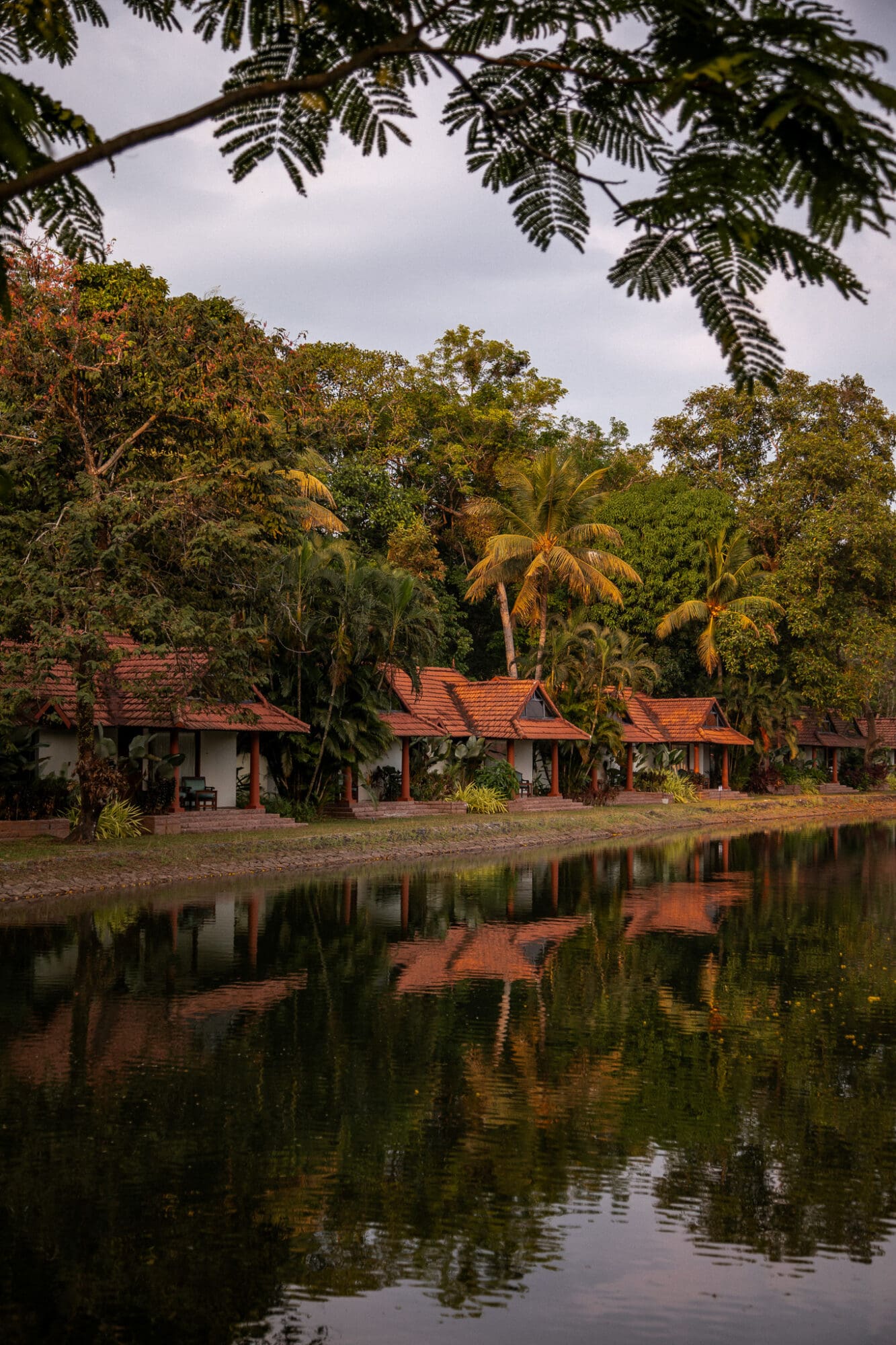
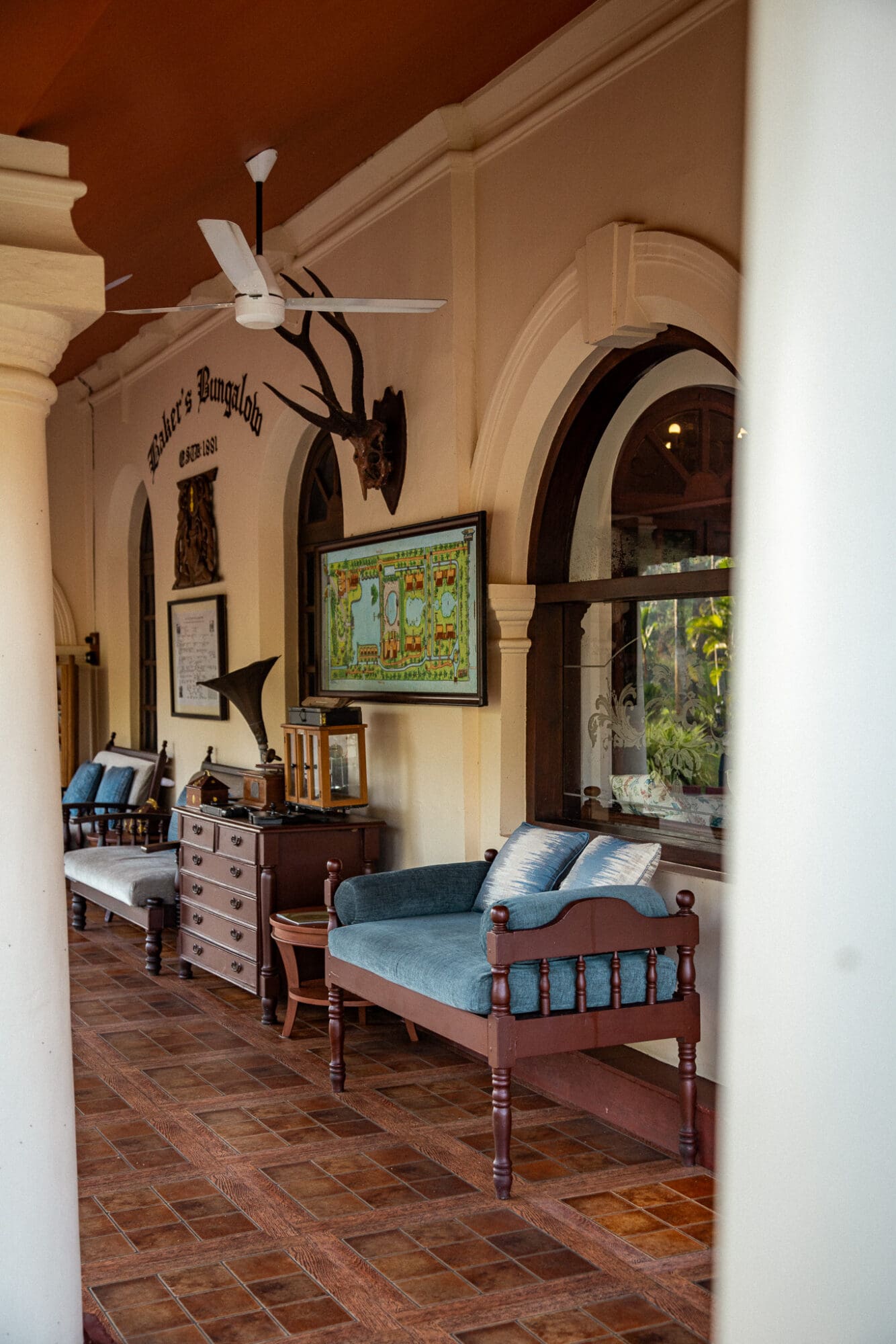
When it comes to luxury hospitality experiences in India, Taj Hotels are the creme de la creme. Their hotels often reside in grand palaces and opulent, iconic buildings - like Mumbai's Taj Mahal Palace, or Udaipur's Taj Lake Palace. Their Kerala backwaters outpost, the Taj Kumarakom Resort and Spa, takes on a decidedly less extravagant, but no less luxurious, tone. Set aside Vembanad Lake, the bulk of the property is housed in a 19th century colonial bungalow, featuring plenty of nostalgic design touches. Cosy cottages sit around a lagoon, whilst individual villas are tucked away in ample garden spaces. At sunset, afternoon chai and banana fritters are served on the lawn, overlooking the lake and the boats that amble by. It's a serene experience, and a wonderful taste of Kerala hospitality in a luxury setting.
We spent a night here after our night on the backwaters, although I regret not staying longer! It's the perfect slow-paced escape, with excellent on-site dining and live evening entertainment.
Kerala Hotel Spotlight: Fragrant Nature Resort Kollam
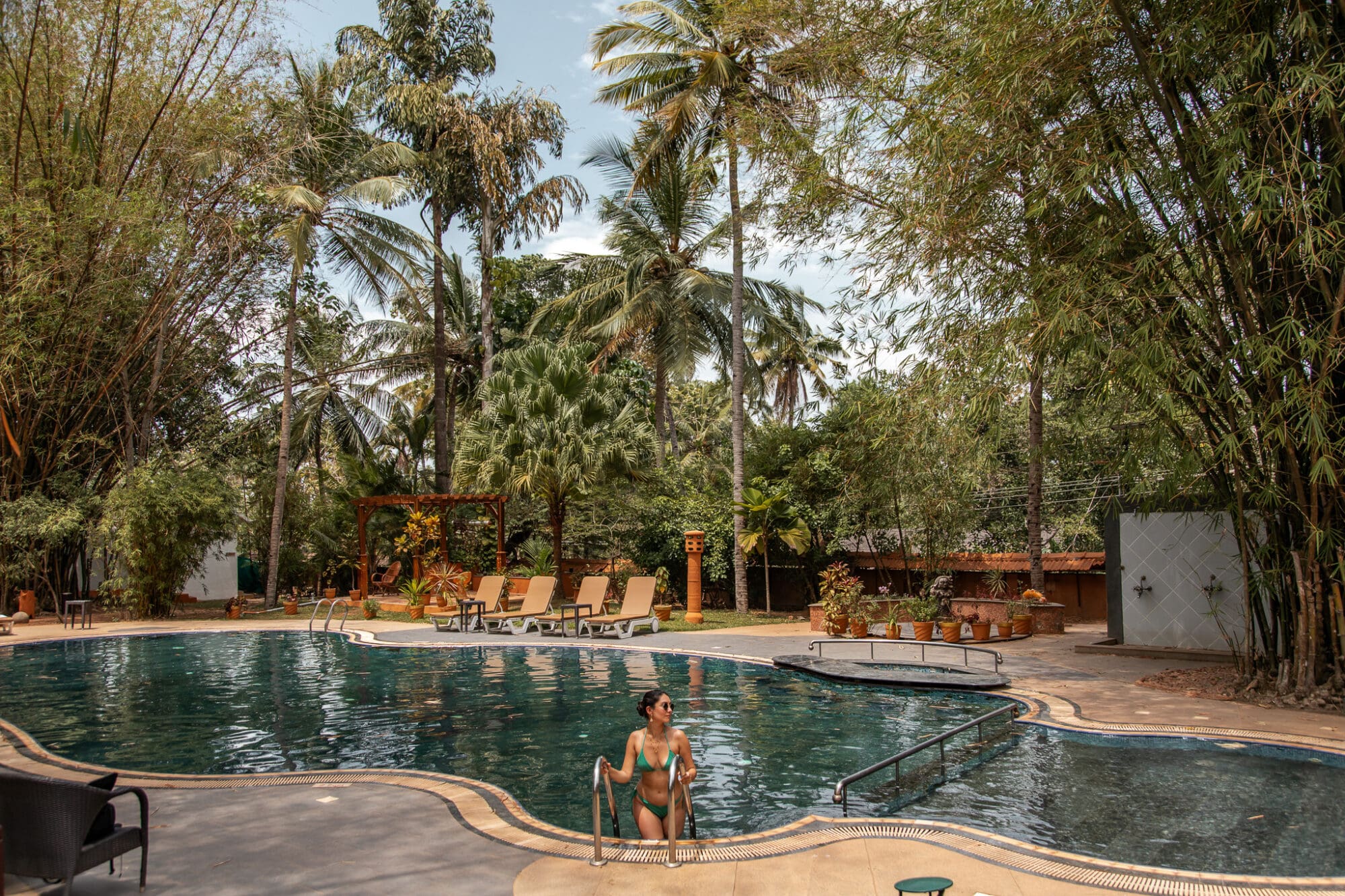
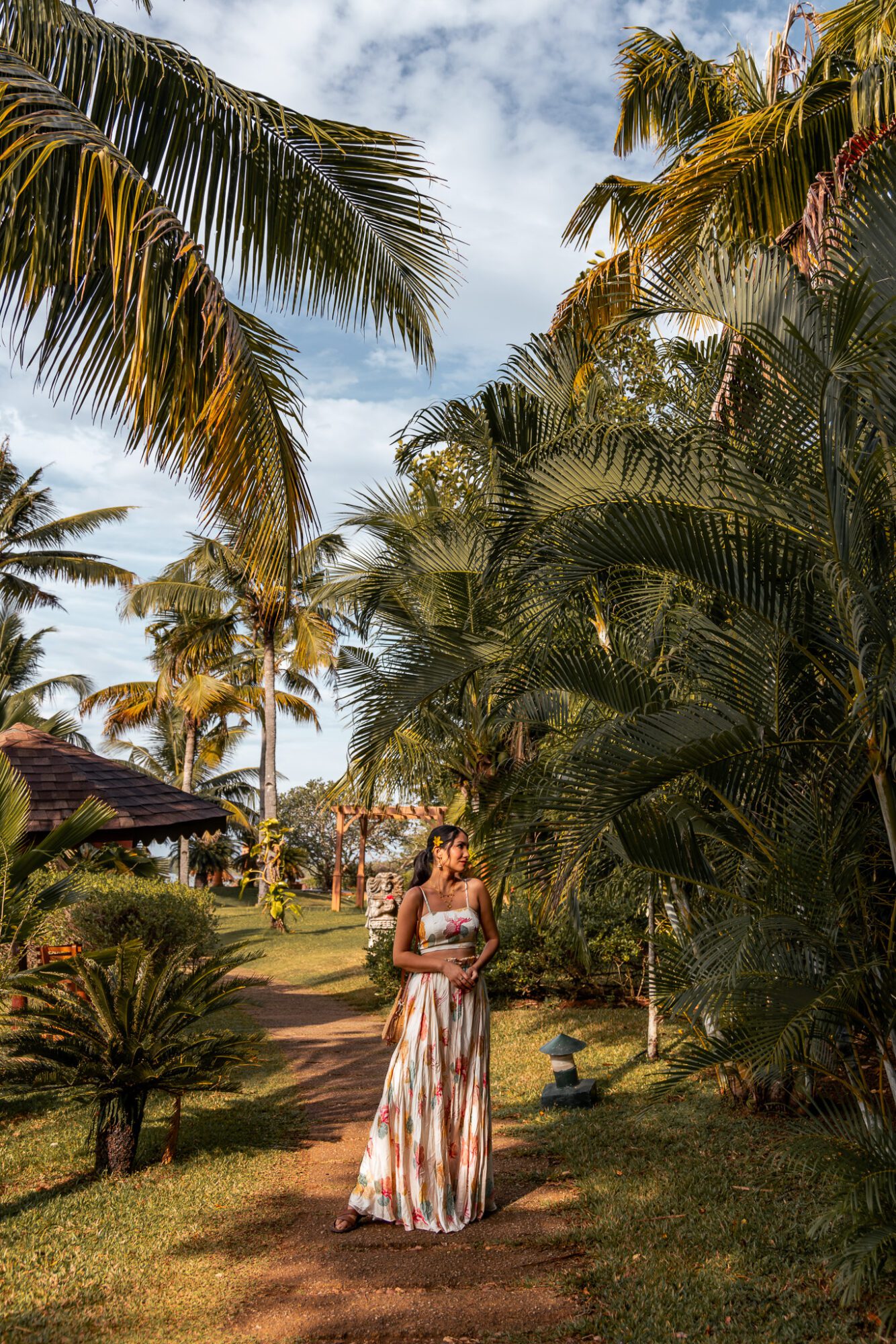
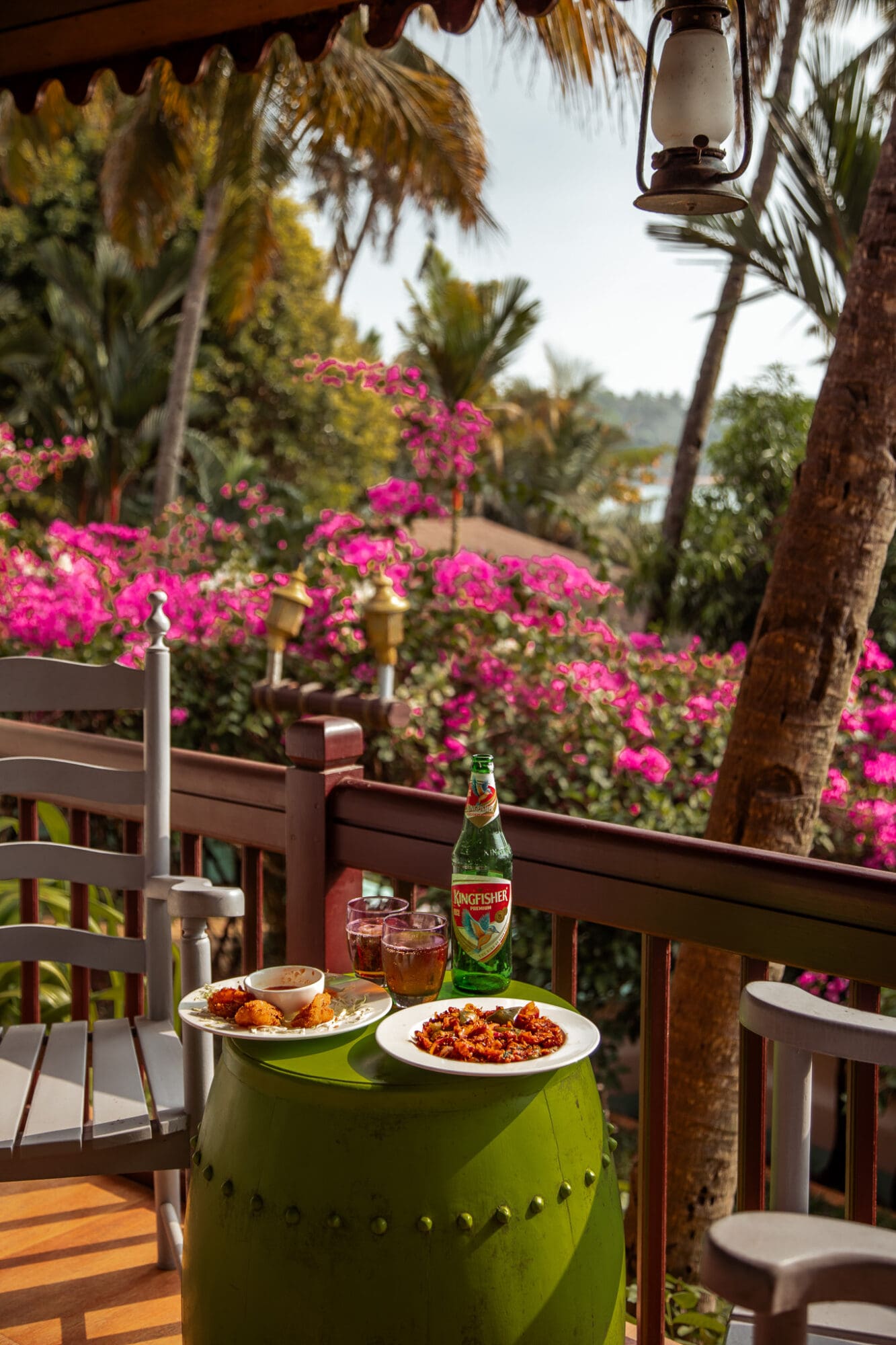
Tucked away on a rural Kerala backstreet is a little patch of paradise, in the form of Fragrant Nature Resort. Strolling through the property feels like wandering through a botanical garden, with towering bamboo lining the pool, and banana and octopus trees dotted throughout amidst the flora and fauna. The views out over the lake, framed by vivid bougainvillea and swaying palms, are equally spectacular. Then there is the property's resident hawk, who might confuse you for a fish when in the pool, so watch out. (This is mostly amusing, but may test your reflexes!). As the sun sets, a bat colony swirls above where guests have flocked to watch the changing colours.
There are hints that this is not a 5 star stay. The villas, though vast and perfectly comfortable, are a little dated and overdue a refresh. The service in the restaurant can be slow, though the buffet selection is decent. But there's plenty more to recommend it, such as the laundry list of activities. Adam tried his hand at fishing, and you can also head out on a boat ride through the mangroves. All in all it's a lovely retreat that encapsulates the serene, slow pace of Kerala life.
Varkala
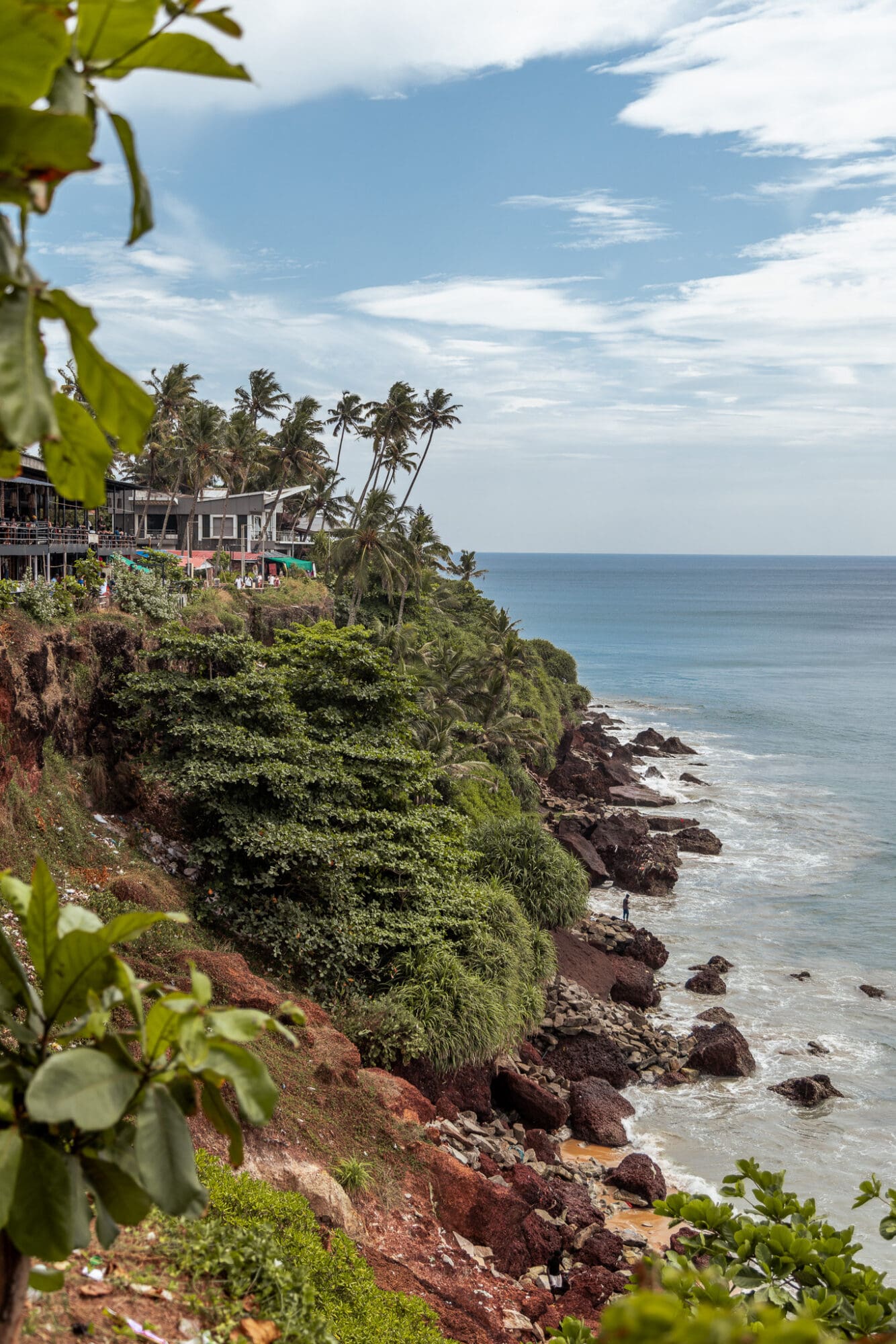
Easy, breezy backpacker hub Varkala is one of Kerala's most developed resort areas. The main boulevard is set atop a dramatic clifftop path overlooking the beach and ocean below. Lined with shops, bars, and restaurants, it's particularly atmospheric at night when the lights come in. The area has become very built up in recent years, and has arguably lost some of it's charm in favour of dubious bars with pounding music and flashing lights. Trying to capture the attention of the Goa crowd, perhaps? However between these, there's still some lovely, casual spots that have retained the original hippie soul of Varkala. It's far from a luxury retreat, but there are plenty of simple homestays and hostels for budget travellers looking to kick back with buzzing beach vibes.
The tourist area of Varkala is split into two sections along the coast, North Cliff and South Cliff, with a small golden beach nestled between. The heart of these can be busy, but further North or South you'll discover a quieter, more laidback vibe. The area attracts surfers and watersports enthusiasts, and has also become a popular hangout for local tourists on the weekends. Saturday night in Varkala has almost a carnival like atmosphere - whether this is a good or bad thing, I'll leave up to you.
The main beach, Papanasam beach, also known as Varkala beach, would probably be overlooked were it not for it's dramatic setting. It's not the most spectacular stretch of sand you'll ever encounter, but the sea is swimmable (though not the cleanest). Generally if you walk further South you're more likely to find a quieter stretch of sand. It's a popular spot to watch the sunset, so can get busy around this time. I can't comment on the areas suitability for surfing as I'm not a surfer myself, however there are plenty of outlets offering classes and equipment.
I've suggested two nights as there's not masses in terms of sightseeing, however if you're keen on surfing and watersports you may want to add another day. If hippie cafes, souvenir shopping, and chilling on the beach aren't your vibe, shorten to an overnight!
Where to stay in Varkala
We spent a night at Mango Villa, a simple, no-frills, but perfectly pleasant homestay around 10 minutes walk away from the main drag. We booked a room with a balcony, which was a lovely spot to sit overlooking the garden. The host was very helpful, providing recommendations and sorting cabs. It seems to have disappeared from booking sites, however - I'm listing it here in case it's a seasonal closure, rather than them sadly having shut!
Luxury stays are few and far between, but your closest match is Gateway Resort. For something a bit more elevated on quieter South Cliff (with very cute dogs!), Villa Akasa looks like a lovely stay. At the north end, Kerala Cottage is a traditional Kerala style property. For the hostel hoppers, Molly's Hostel is very kind on the purse-strings, though a bit away from the main hub.
Where to eat in Varkala
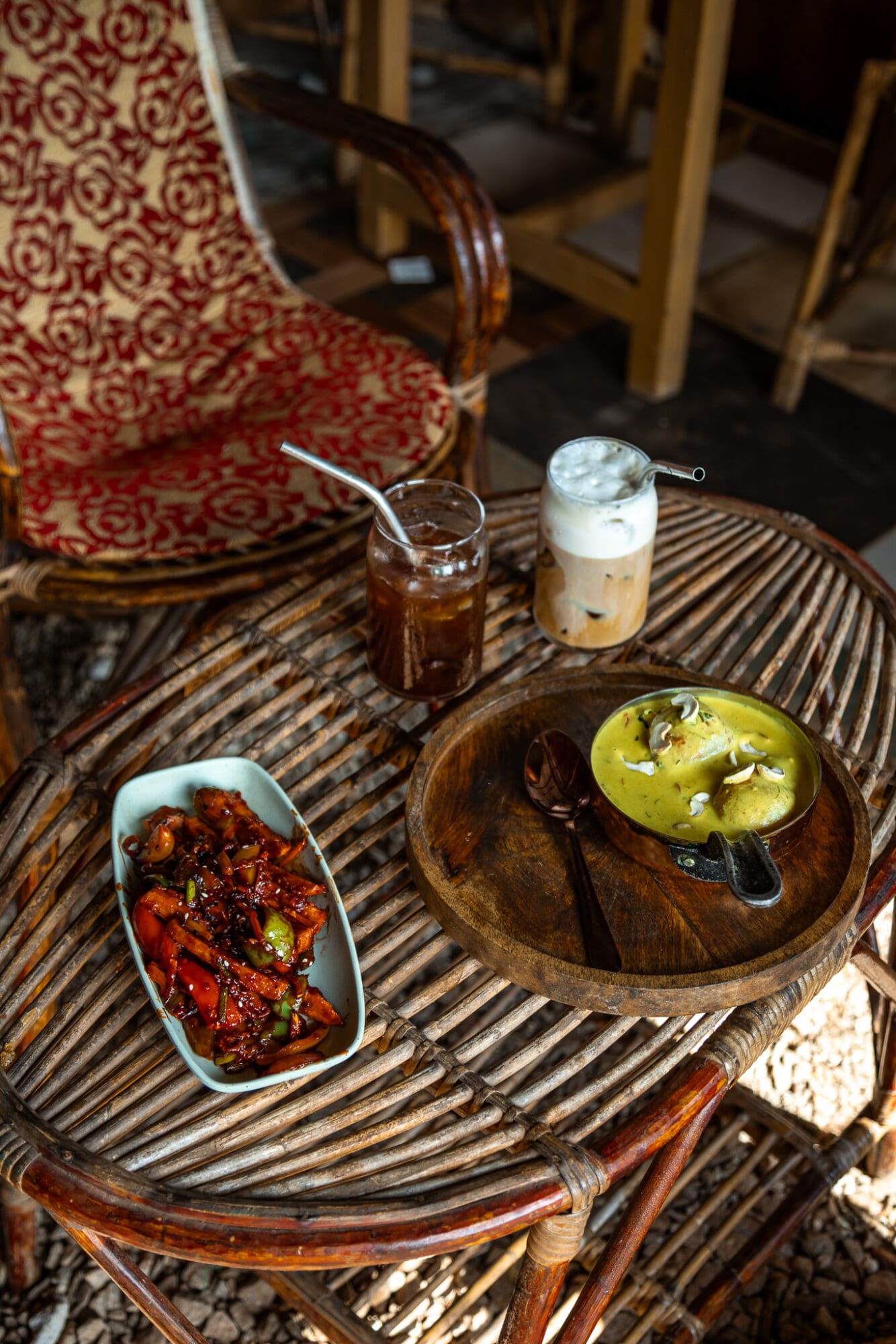
- Aum Cafe: A cosy spot towards the quieter end of North Cliff, serving up a predominantly vegetarian menu. Delicious honey chilli potatoes (these were my go-to order in India!) and a creamy vegetarian malai kofta (pictured). There's also soups and salads on the menu, making it a great place if you're looking for healthier options.
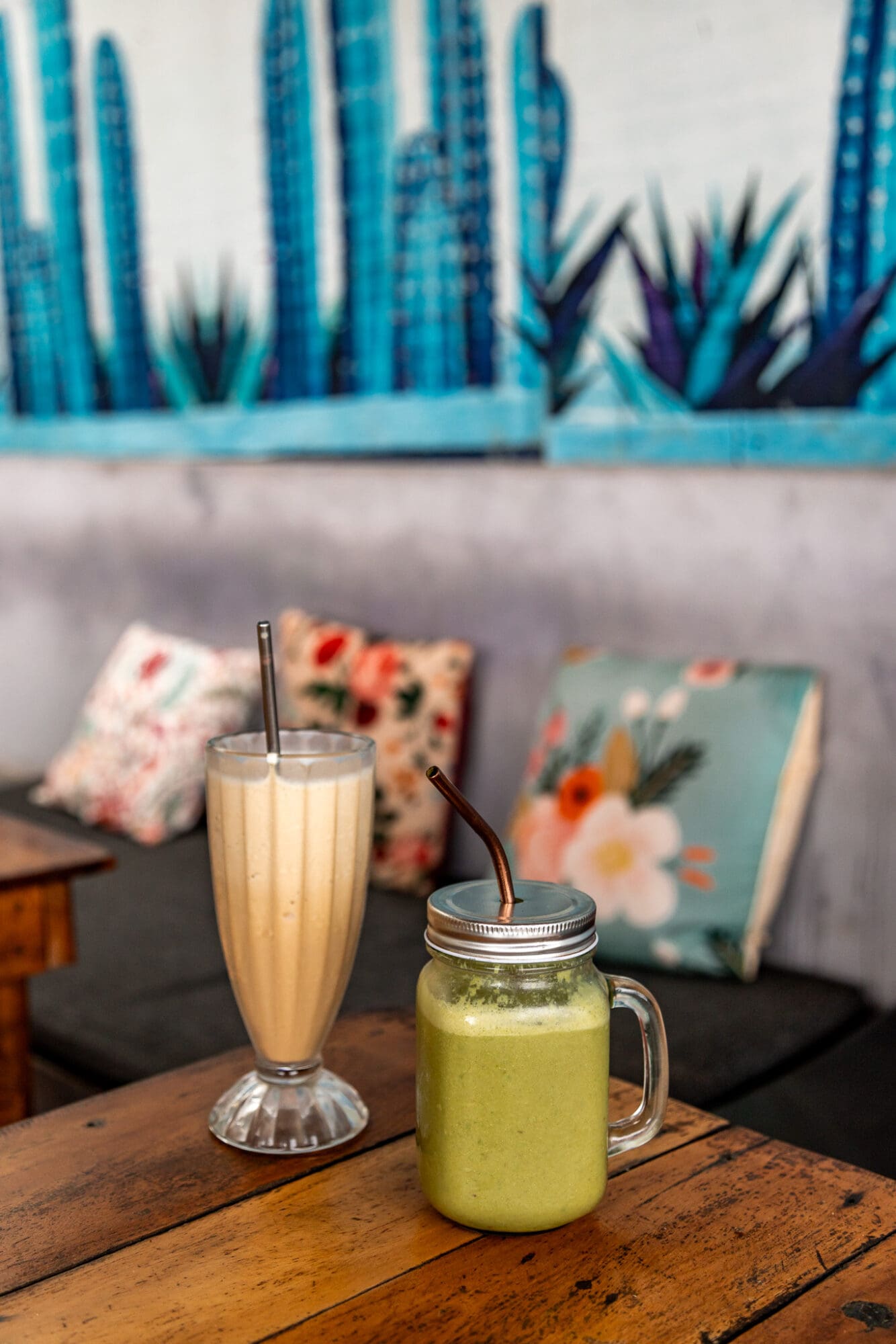
- Sun Francisco Cafe: If you're looking for a comprehensive breakfast menu, Sun Francisco has you covered. The coffee menu is extensive, as are the smoothies. Breakfast staples like pancakes and even an English breakfast are on offer. The all day menu is made up of burgers, sandwiches, and pizzas, all served up in boho-esque surrounds.
- Cafe Sarwaa: Another boho cafe that wouldn't look out of place in Bali, Cafe Sarwaa is a casual spot on South Cliff for breakfast, light bites, and traditional Kerala dishes. We didn't actually make it to the Varkala outpost, however their Trivandrum branch was a favourite.
- Mamma Champos: Tibetan meets Indian at a bustling family friendly spot. The menu ranges from momos (large portions, so order carefully!) to pizza freshly prepared with a wood-fire oven. It's disappeared off Google Maps for some reason so I'm not 100% on this one, but it's worth a visit if it's still around!
Trivandrum (Thiruvananthapuram)
Whilst you could arguably skip Trivandrum off your Kerala itinerary, chances are you'll end up going through it at some point. As the Capital of Kerala, it's the transport hub of the state. If you end up coming into Trivandrum, either by train or plane, just flip this itinerary on it's head and finish in Cochin!
I actually thought Trivandrum was just another Indian city until this recent trip. However this was the first time I really delved deeper into the city and everything it had to offer, discovering some great restaurants and sights along the way. Like Cochin, it feels cleaner and more people-friendly than some of India's Northern cities. It's also compact enough to discover in a couple of days, allowing you to focus your time on beaches and backwaters.
Things to do in Trivandrum
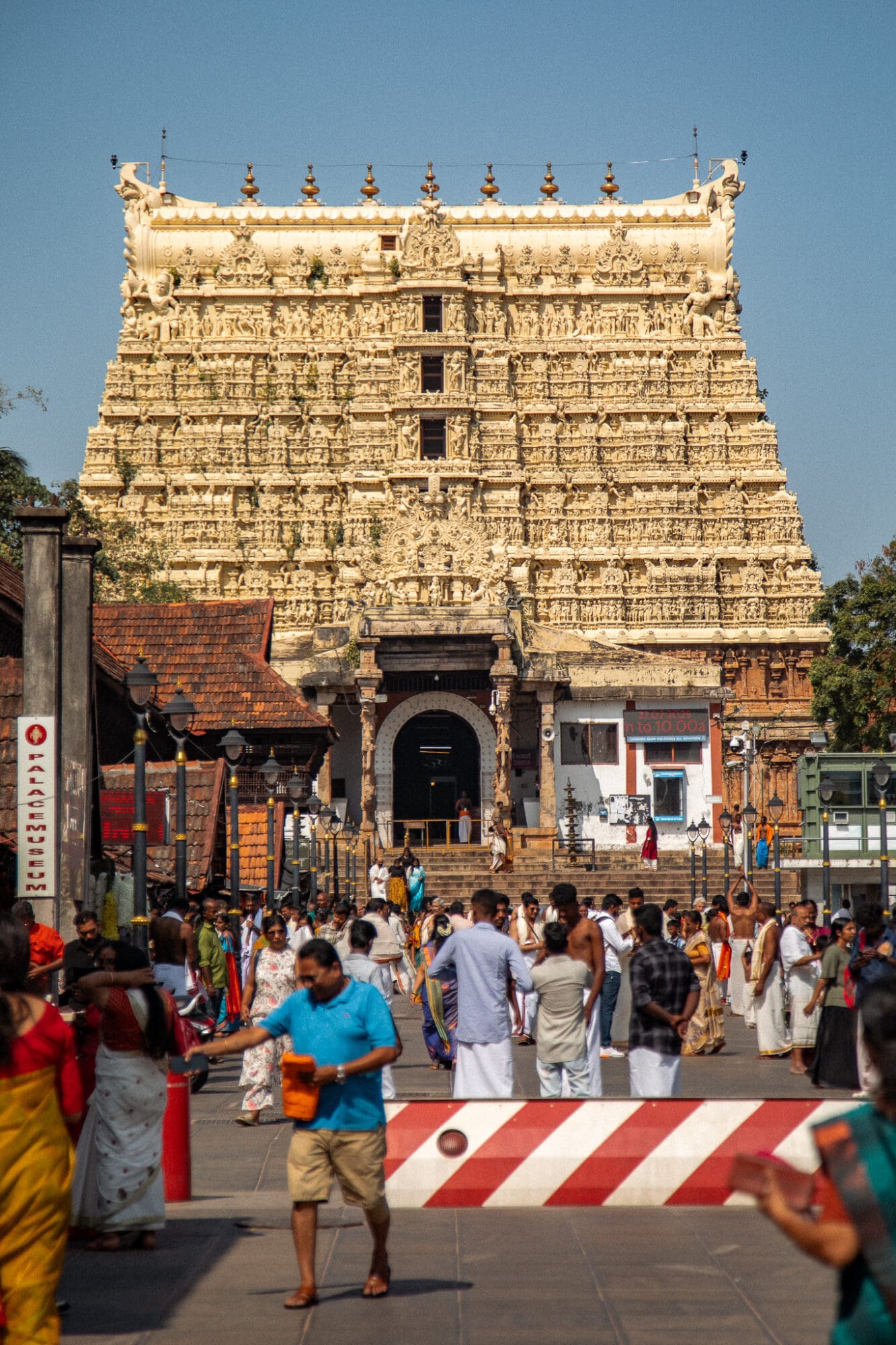
Sree Padmanabhaswamy Temple: Believed to be the world's richest temple, this opulent 8th century gold Hindu temple (pictured) is an awe-inspiring sight. There is a dress code for entering the temple, and entry is only allowed for Hindus. However you can get a glimpse from the outside.
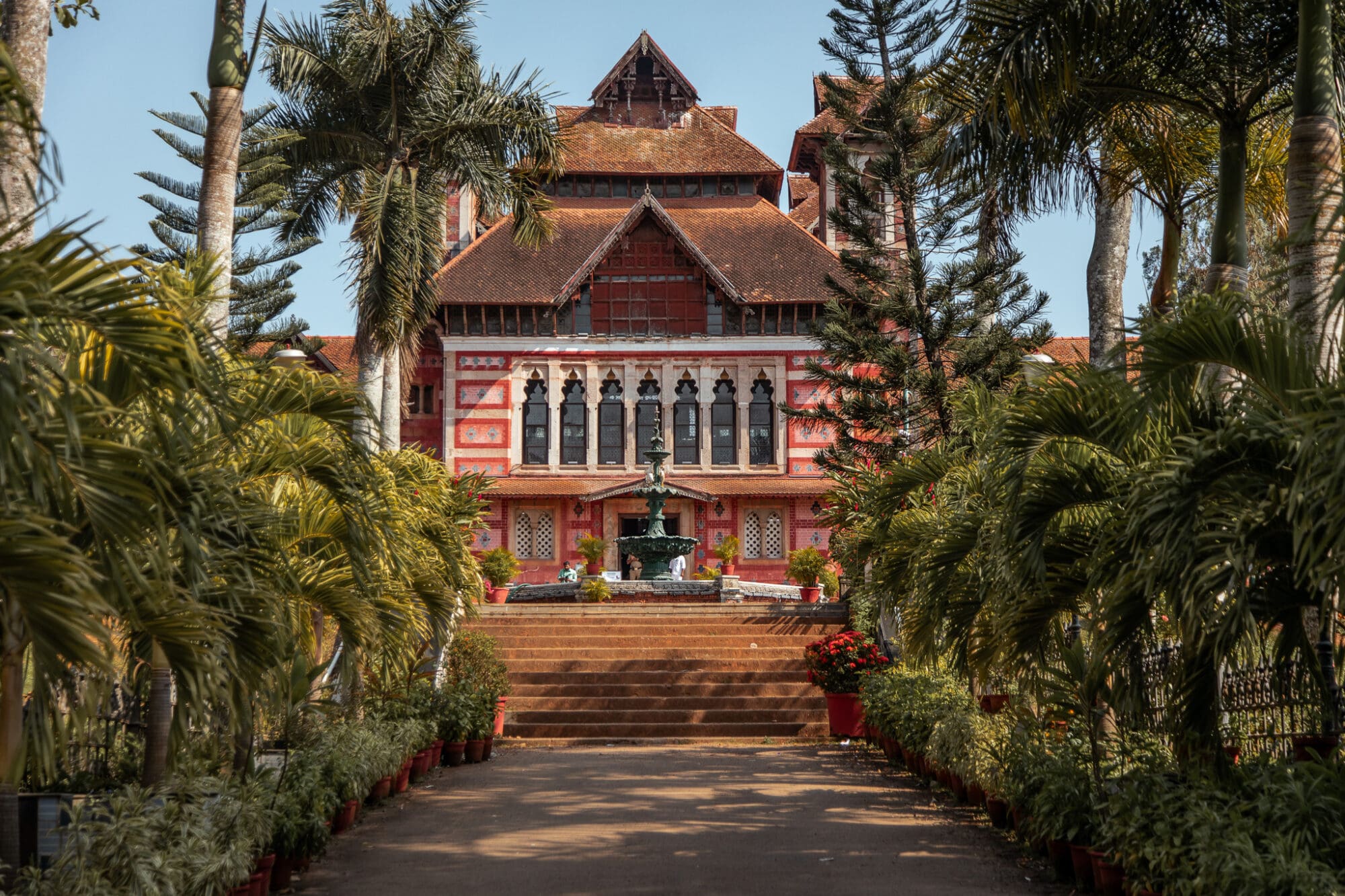
The Napier Museum: An art and natural museum in the heart of the city. It houses a number of interesting cultural artefacts including intricate historic carvings and ornaments. The building itself, a striking pink mansion in the Indo-Saracenic style, is worth seeing, with lovely manicured grounds shared with Trivandrum zoo.
Puthen Maliga Palace Museum: This historic palace is open to the public, housing a vast collection of royal artefacts such as crowns, weapons, and paintings. The palace is built in the traditional Keralan style, with a unique feature of 122 horse figures decorating the wall brackets.
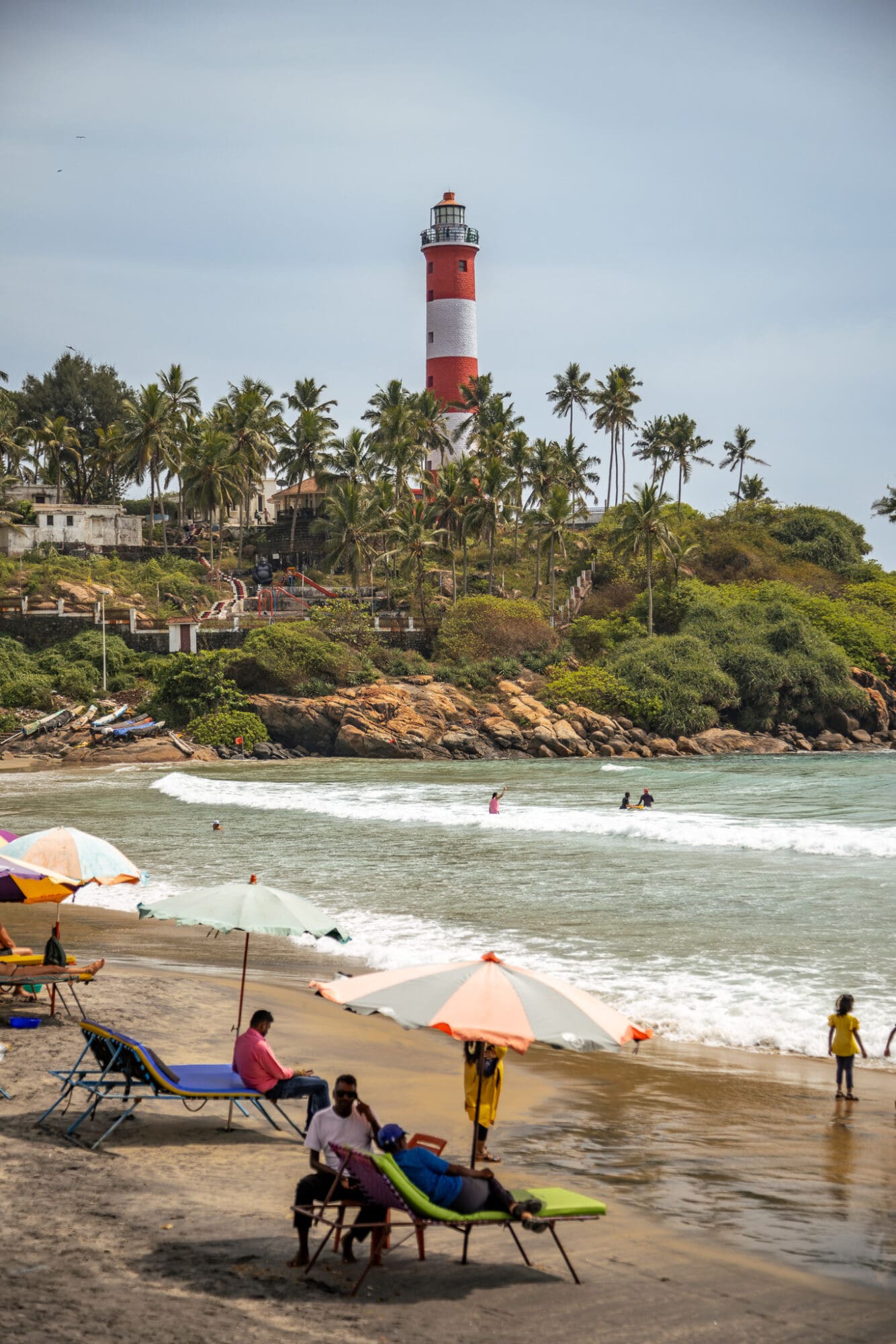
Kovalum Beach: Trivandrum's local beach, overlooked by a quaint lighthouse (pictured). It's not the cleanest or most breathtaking beach you'll ever see, but a perfectly nice spot to pitch up for a lunch or dinner of fresh seafood and a bottle of cobra. Top tip: If you want to avoid the bustle of Trivandrum, you can stay around Kovalum, such as the luxurious Leela resort.
Where to eat in Trivandrum
Cafe Sarwaa
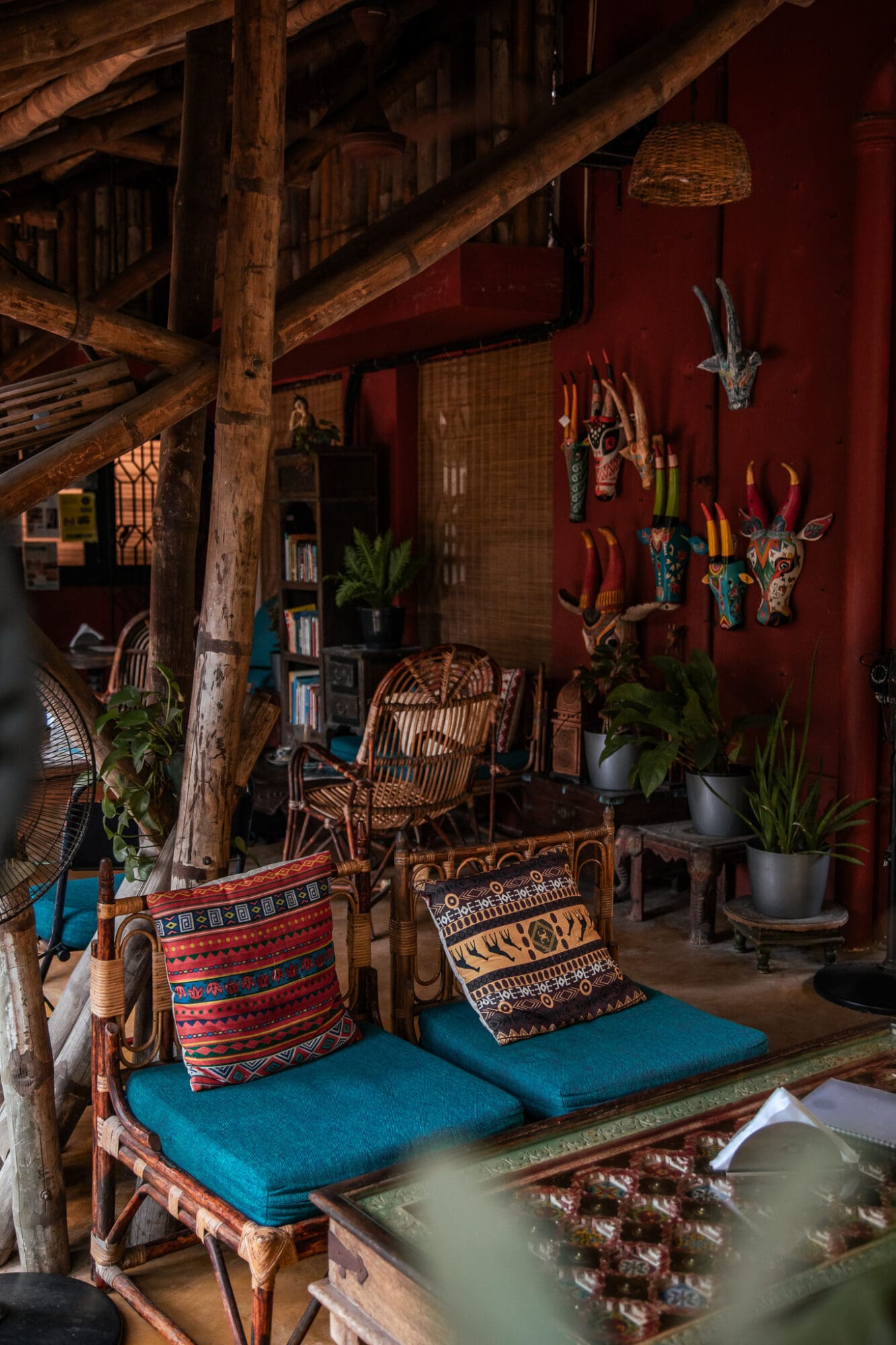
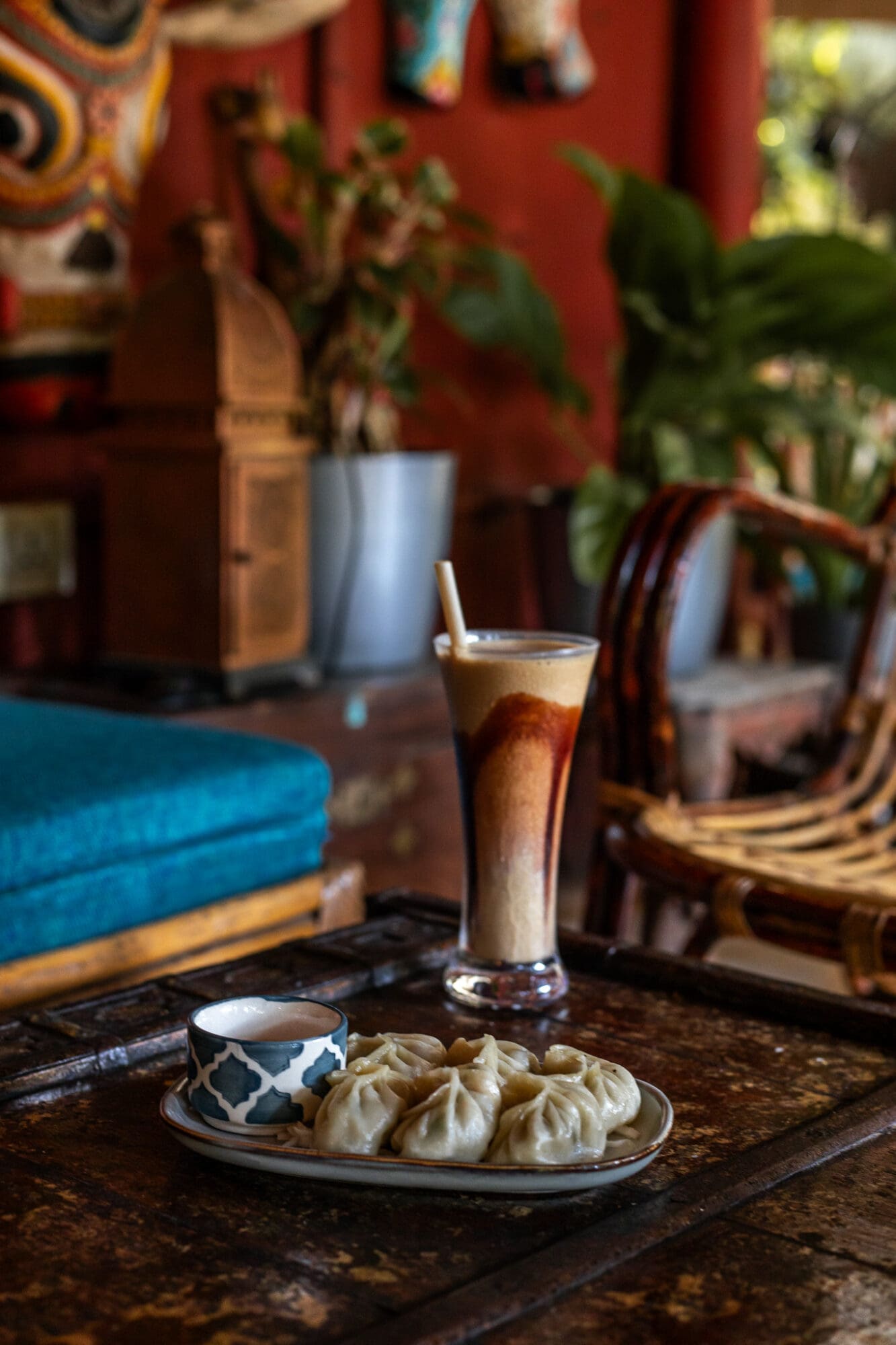
Adam decided to get some dental work done in Trivandrum, leaving me twiddling my thumbs in a random part of town. So, to the nearest coffee shop I headed. Cafe Sarwaa is an unsuspecting oasis hidden away on an otherwise uneventful road. A lifestyle store and cafe, the menu offers sandwiches, wraps, smoothie bowls, and desserts such as waffles and pancakes. They have other ventures in Varkala, and it definitely has a hint of that bohemian vibe, with bamboo eaves, wicker chairs and traditional dark wood furnishings. The space itself is delightfully cool and dark despite the heat of the streets, and was busy with tourists and locals alike when I visited.
The food itself takes a little while to come, but is well worth the wait. The cold coffee was one of the best I’ve had in India, and the chicken momos packed some serious heat. However I’d skip the “glowing skin” juice, which was a bit too thick, and tasted a bit tooo healthy. All in all though, a lovely spot to while away the time it takes for a root canal!
Baker's Arch
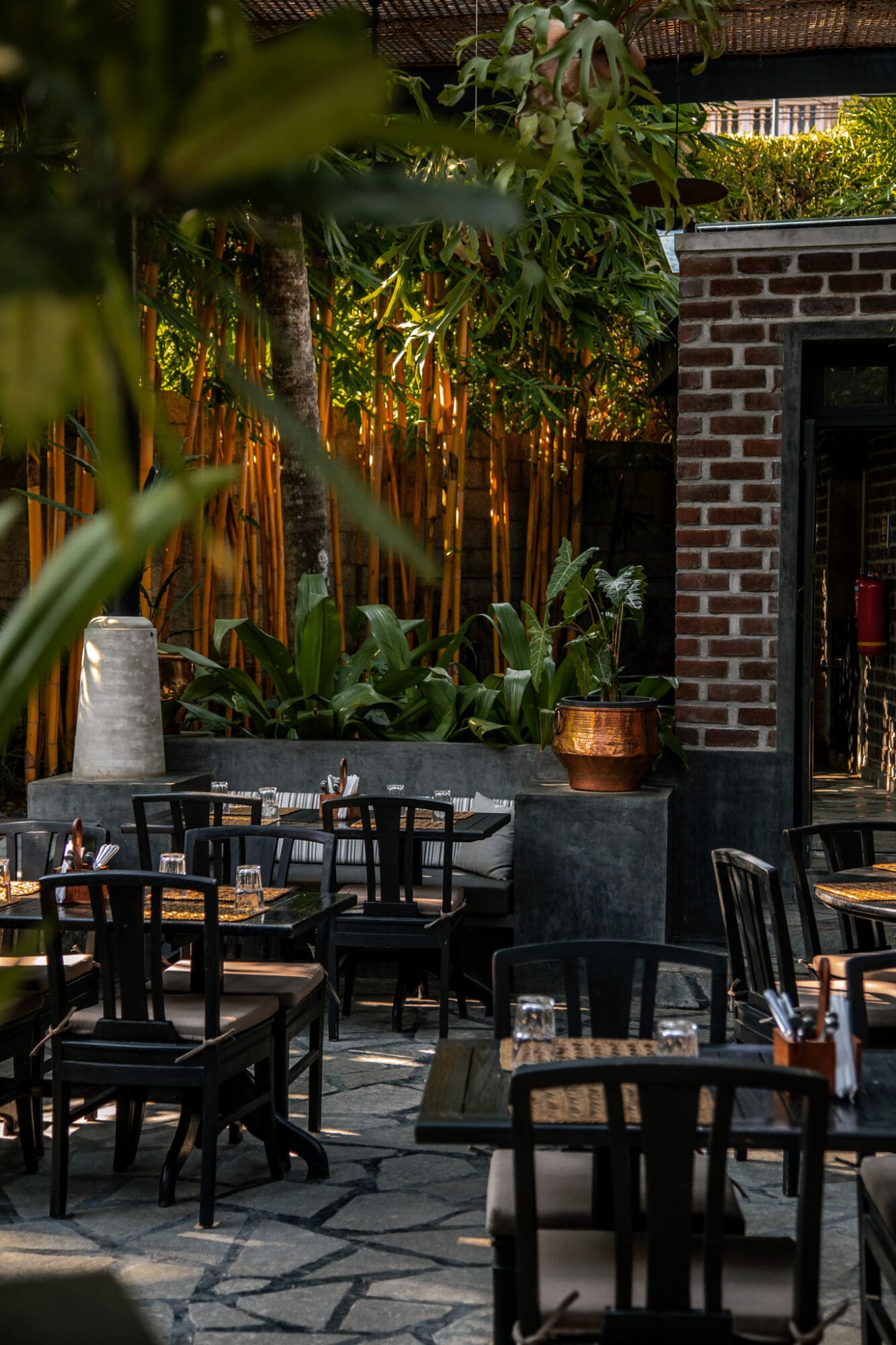
Trivandrum is not necessarily a city you might associate with sophisticated dining. In fact, at first glance the dining scene is mostly no-frills local style canteens. However if you are looking for something a little more elevated, I'd recommend Baker's Arch. This chic, minimal garden cafe restaurant, tucked away in a quiet backstreet, is a real Trivandrum hidden gem. In fact, the building was originally designed by renowned British-Indian architect Laurie Baker. The courtyard is lined with bamboo, whilst light patterns glimmer through dense foliage to play across the surface of cement blocks. It's a tranquil, elegant space.
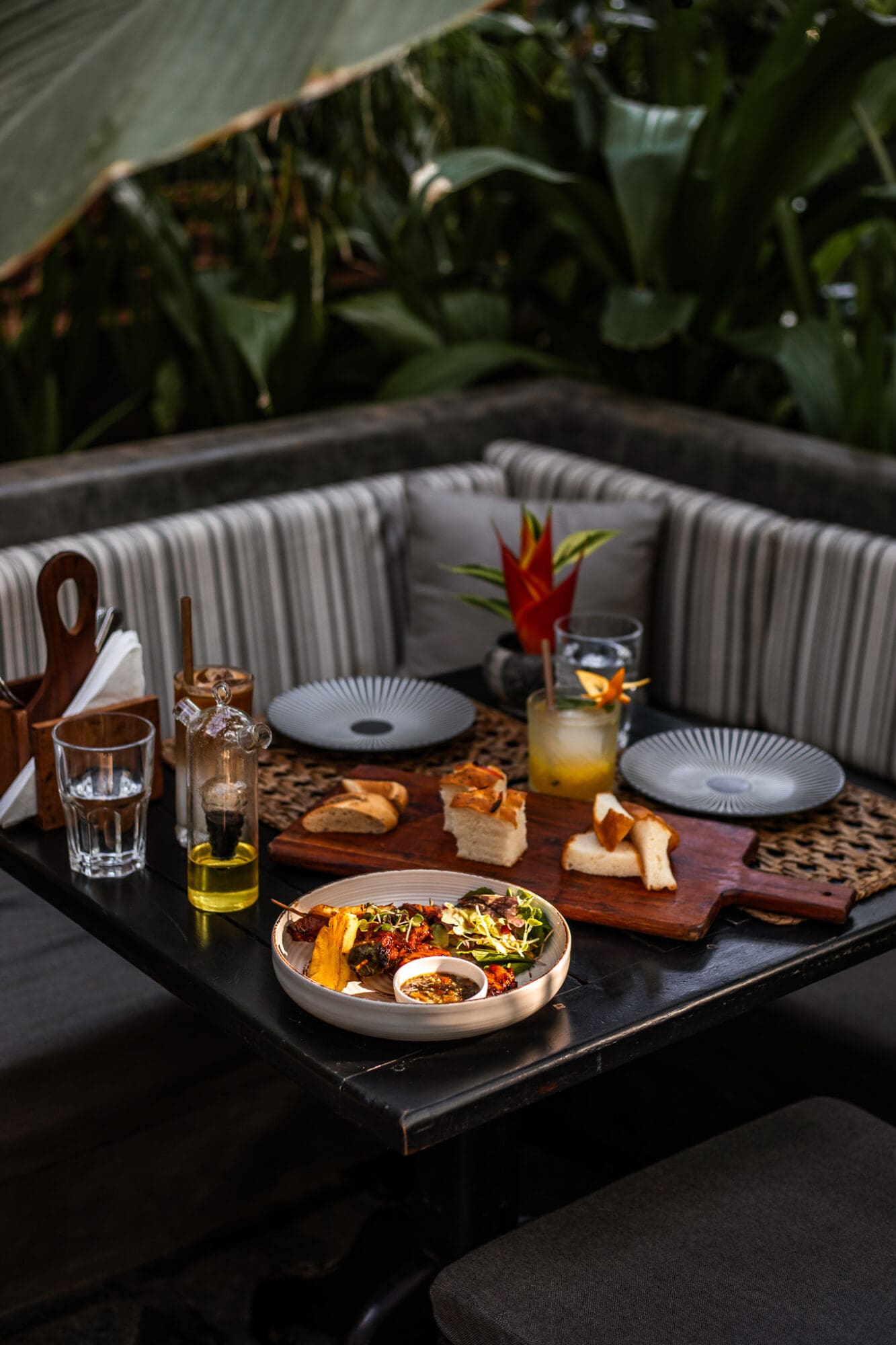
The food menu is a mix of international fusion dishes from all corners of the world. We tried chicken espetado, soaked in a gooey, spicy glaze with a side of lightly grilled pineapple. The stuffed cannelloni is a decadent affair of cheese and pesto, akin to lasagne in a thick tomato sauce. I'm often dubious of ordering non-Indian food in India, but Baker's Arch proved the exception to the rule.
Kerala Hotel Spotlight: Poovar Island Resort
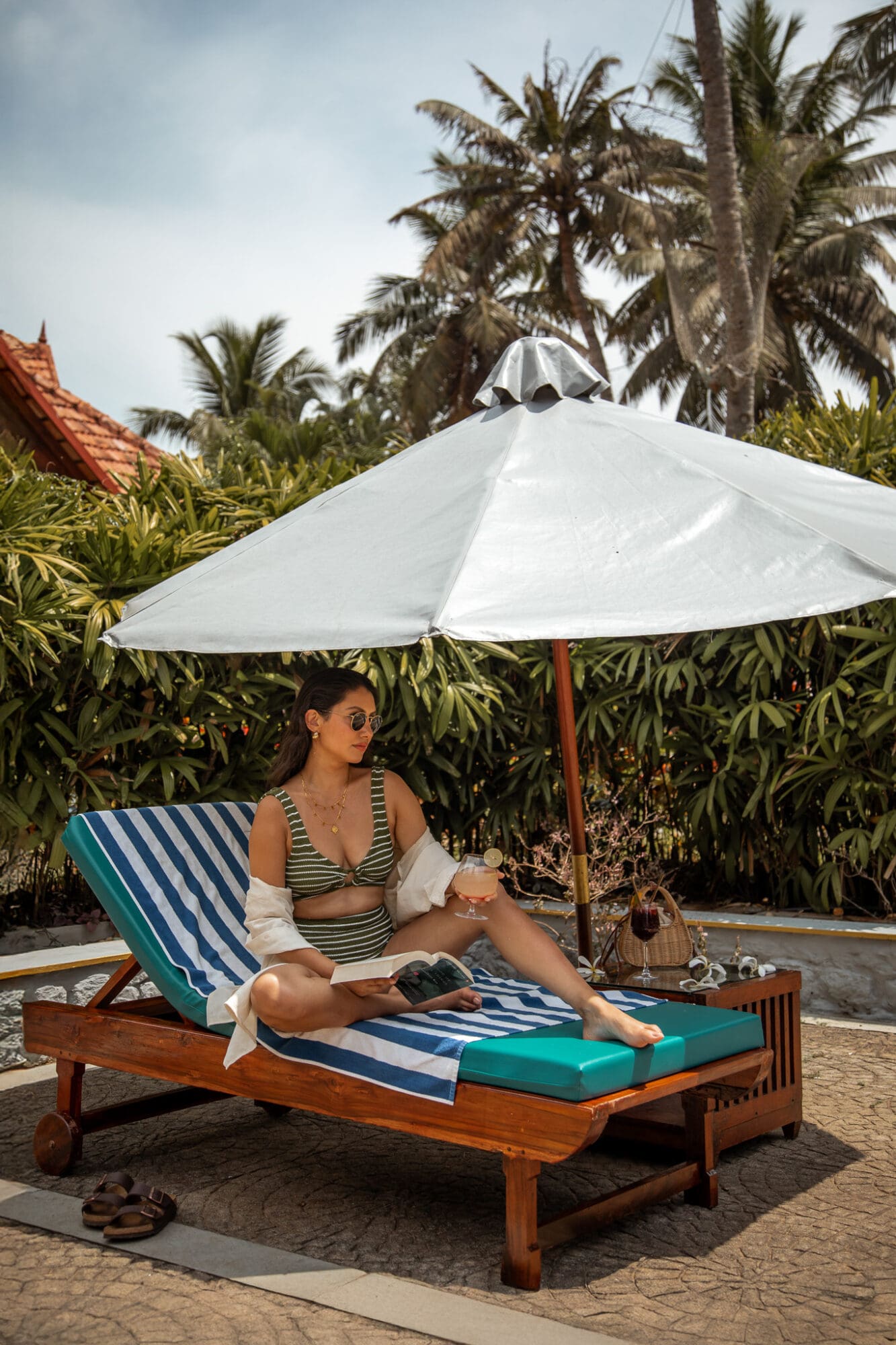
It occurred to me on check in, that Poovar Island Resort is probably my most visited hotel, anywhere. I first visited the property back in 2015 with a group of friends backpacking through Kerala. After hostels and no frills home stays it felt like the height of luxury, and our one night in the property's floating cottages (one night was the most our budgets could stretch to back then...) was one of the best nights of the whole trip. Adam and I visited again in 2018, at which time he was out with food poisoning from a bad meal in Madurai. We spent most of the trip cosied up in the room, but it was still lovely.
The third time around, the property is as beautiful as I remembered. It's about an hours drive from Trivandrum, or 30 minutes from the nearest train stations, Parassala and Dhanuvachapuram. Sat between the backwaters and the ocean, the location is fairly remote and requires a short speedboat journey to reach.
There are three types of room, suites, land cottages (split between "superior" and "premium"), and floating cottages. I've stayed in all three over the years! The floating cottages, I'll admit, I don't quite remember a decade on - and I imagine they may have changed since! The land cottages are simple and comfortable, and the maharajah suites are a cut above, decorated in rich Keralan carved dark woods.
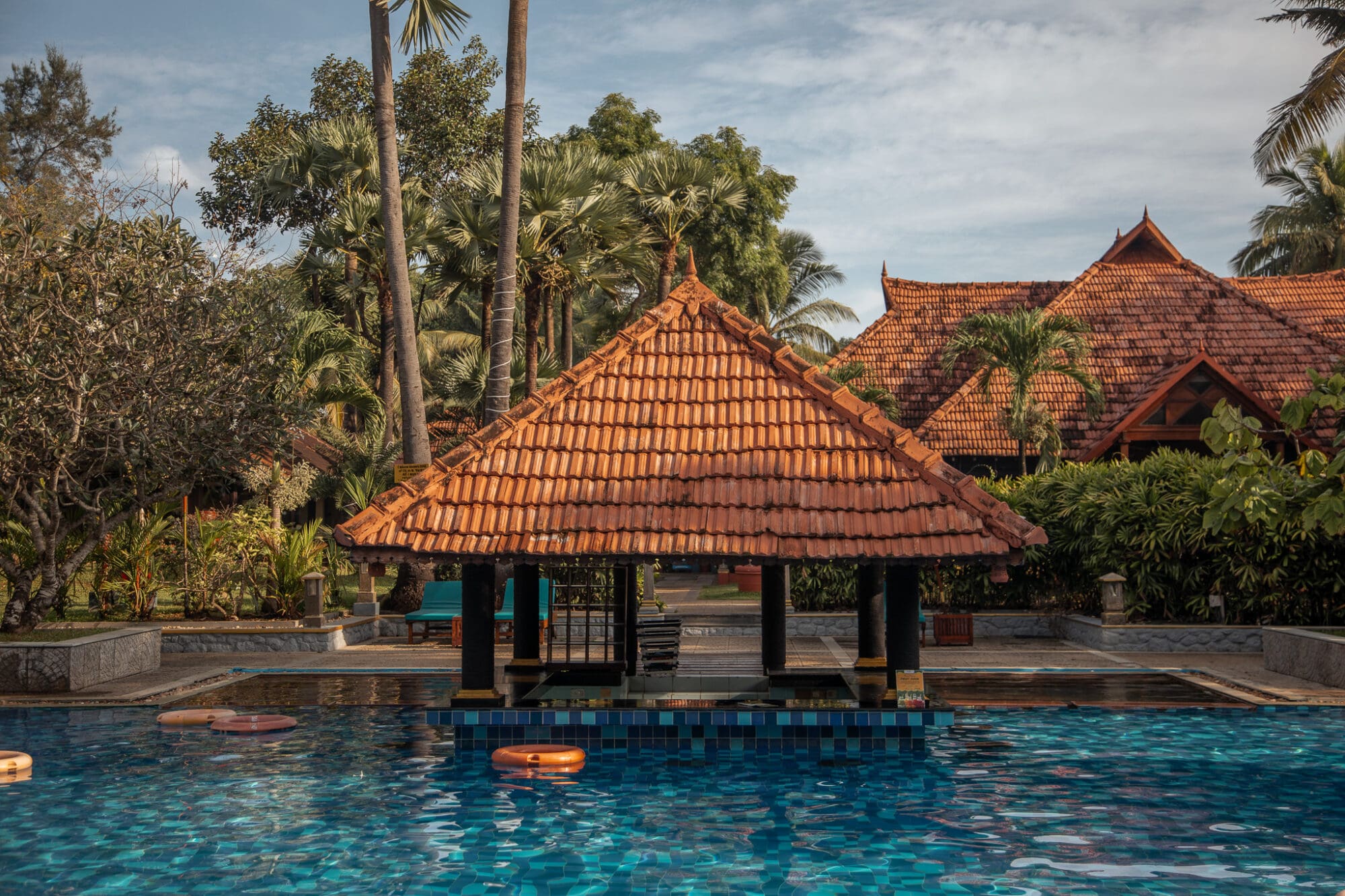
There are a fair few amenities, including a gym, conference centre, two pools, and even dental care. There is also a separate but connected Ayurveda Village, which hosts a vast Ayurveda centre. However the real standout of the experience is the property itself, the grounds of which overlook the ocean beyond. The skyline is studded with palm trees, from which hammocks hang at regular intervals. Flowers in bold pinks and yellows line the walkways and fall from branches to picturesquely litter the grass, whilst herons patrol the property. The city feels very far away.
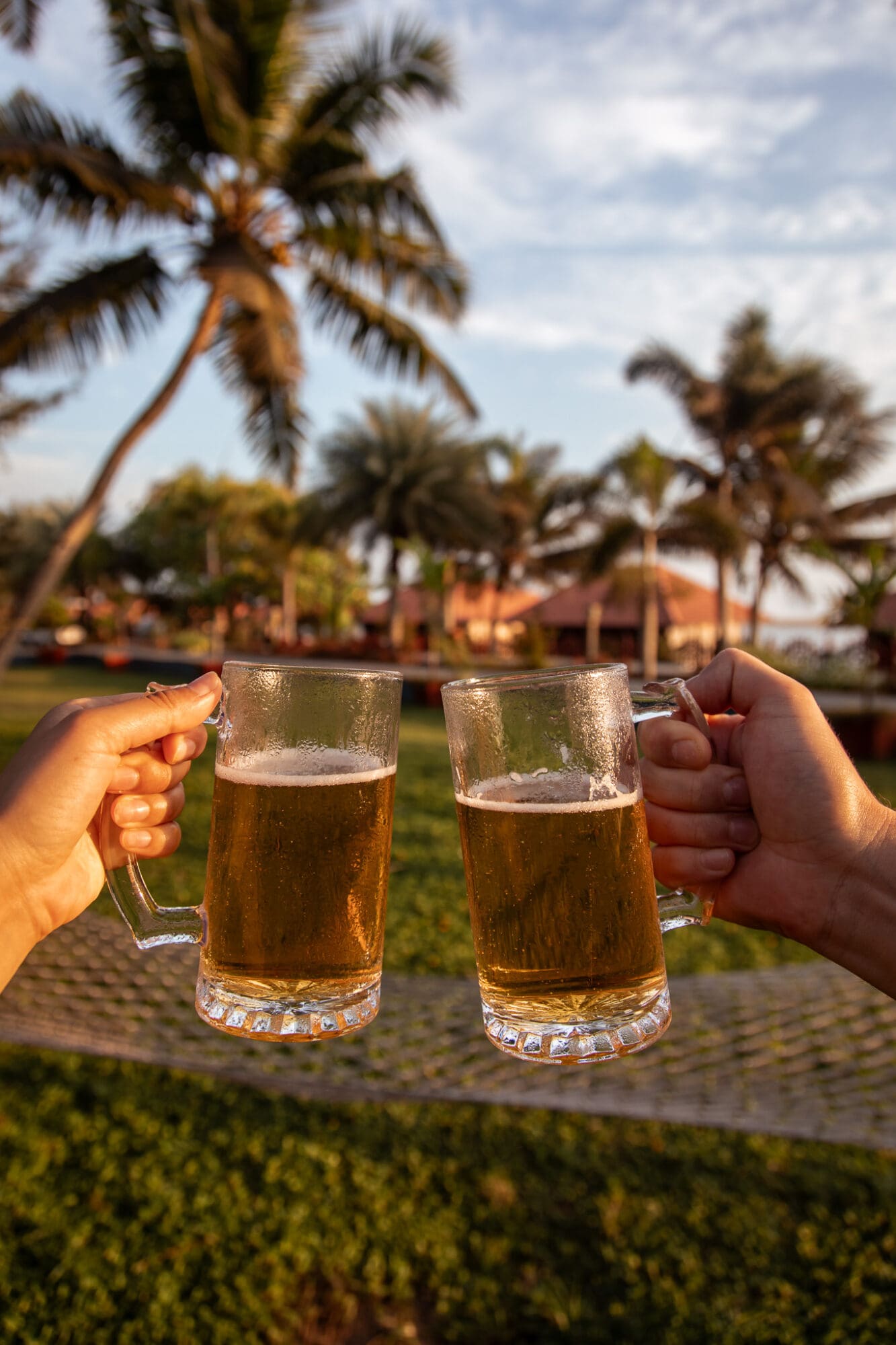
Being so remote, you're unlikely to leave to eat. Thankfully the buffet is excellent. A wide range of curries and local delicacies is served for breakfast, lunch, and dinner. There is also a la carte - we ordered a tandoori murgh chicken dish that had such a rich depth of flavour, it was one of the best things we ate on the whole trip. Even the room service was a pleasant surprise. If you do one thing? Grab yourself a Kingfisher, and watch the colours change down at the sunset bar.
And with that, what I consider to be a pretty much perfect 2 week itinerary exploring the diverse landscapes, laidback cities, and rich culinary scene of Kerala. I truly hope you fall in love with this incredible part of India as much as I have over the years. And as always, if you have any questions, comments, or other recommendations for things to do in Kerala, please do pop them in the comments!
Heading North? Check out my travel guide to Jaipur, Rajasthan
Pin Me